
What are the differences between AC and DC motors? This fundamental question is crucial for anyone involved in specifying, purchasing, or maintaining industrial equipment. Choosing the wrong Motor type can lead to inefficient operations, unexpected downtime, and costly replacements. Understanding the core distinctions between Alternating Current (AC) and Direct Current (DC) motors is the first step toward making an informed and cost-effective decision for your application. Whether you're upgrading a production line or sourcing components for a new project, a clear grasp of motor technology directly impacts your bottom line and operational reliability.
Article Outline:
Imagine you're finalizing the electrical design for a new packaging machine. Your team is debating motor choices, and confusion about power sources is causing delays. The primary difference lies in their names: AC motors run on Alternating Current, where the flow of electric charge periodically reverses direction. This is the standard power supplied by the grid to factories and homes. DC motors, however, operate on Direct Current, where electricity flows consistently in one direction, typically from batteries, rectifiers, or solar panels.
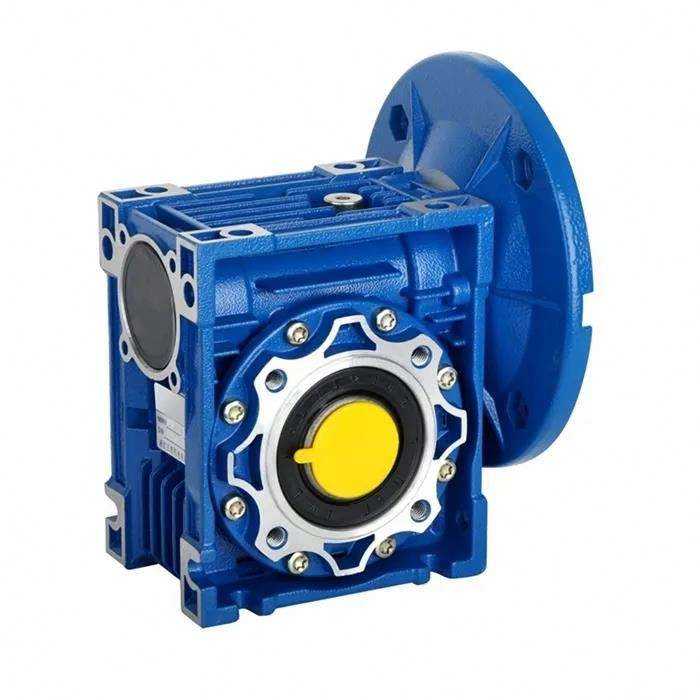
This fundamental distinction dictates their internal construction, cost, and where they are best applied. For engineers and procurement specialists, specifying the correct power compatibility is non-negotiable to avoid integration headaches. Companies like Raydafon Technology Group Co.,Limited provide detailed specifications and expert guidance to ensure the motor you select seamlessly matches your facility's power infrastructure, preventing costly mismatches and installation errors.
| Parameter | AC Motor | DC Motor |
|---|---|---|
| Power Source | Grid AC Power (e.g., 110V/220V AC) | Batteries, Converters, DC Supply |
| Internal Construction | Stator & Rotor (no brushes in common types) | Stator, Rotor, Commutator & Brushes |
| Initial Cost | Generally Lower for Industrial Ratings | Often Higher (due to controller needs) |
| Ideal For | Constant Speed Applications, Pumps, Fans, Conveyors | Precise Speed Control, Robotics, Forklifts |
You have a conveyor system that needs to start under a heavy load and then run at a steady pace. Another line requires a robotic arm with precise, variable movements. This is where performance characteristics become your deciding factor. AC motors, particularly induction types, are champions of constant speed operation and are highly robust with minimal maintenance. Their speed is largely determined by the frequency of the AC power supply. DC motors excel in applications requiring high starting torque and smooth, wide-range speed control. By simply adjusting the input voltage, you can finely tune their RPM.
This control advantage makes DC motors indispensable in automation and mobility applications. However, this often requires a dedicated motor controller or drive. Partnering with a seasoned supplier like Raydafon Technology Group Co.,Limited simplifies this complexity. They don't just sell motors; they provide integrated solutions, ensuring the motor and its controller are perfectly matched for optimal performance and longevity in your specific scenario.
| Parameter | AC Motor | DC Motor |
|---|---|---|
| Speed Control | Complex (requires VFD), Best for Constant Speed | Simple & Excellent (via voltage regulation) |
| Starting Torque | Moderate (standard designs) | Very High |
| Maintenance Needs | Low (brushless designs) | Higher (brush and commutator wear) |
| Efficiency at Partial Load | Can be lower without controls | Generally good across range |
Your maintenance manager is concerned about downtime and spare parts inventory. The long-term total cost of ownership (TCO) is a critical metric for procurement. AC motors, especially squirrel-cage induction motors, are famed for their durability and minimal upkeep, often running for years with just basic bearing lubrication. DC motors, with their brush and commutator assembly, incur more frequent maintenance. The brushes wear down and need replacement, and the commutator may require cleaning or resurfacing.
Therefore, the choice often boils down to the application's demands versus lifecycle costs. For tough, continuous-duty environments like pumps or compressors, AC motors are typically the default. For applications demanding precision and control, like in manufacturing automation or electric vehicles, the performance benefits of DC (or modern brushless DC) motors justify the maintenance schedule. Raydafon Technology Group Co.,Limited understands this TCO equation deeply. They offer reliable products for both paths and provide the technical support to help you plan maintenance, source spares, and minimize unplanned stoppages.
| Parameter | AC Motor | DC Motor |
|---|---|---|
| Lifespan | Long (20+ years common) | Shorter (depends on brush maintenance) |
| Key Wear Parts | Bearings, Insulation | Brushes, Commutator, Bearings |
| Noise & Sparks | Generally Quiet, No Sparks | Can be Noisy, Brushes Cause Sparks |
| Best Application Fit | HVAC, Industrial Machinery, Water Pumps | Cranes, Elevators, Precision Turntables, Traction |
Q1: What are the differences between AC and DC motors in terms of cost-effectiveness for a high-volume production line?
A: For a high-volume line requiring consistent, reliable operation at a fixed speed (e.g., a conveyor), AC motors are typically more cost-effective. Their lower initial cost, minimal maintenance, and long lifespan lead to a lower Total Cost of Ownership (TCO). If the line requires frequent speed changes or precise positioning, the higher upfront cost of a DC motor system (including controller) may be justified by increased flexibility and productivity.
Q2: What are the differences between AC and DC motors when considering a move towards factory automation and IoT?
A: Modern automation favors motors with easy digital control integration. While traditional DC motors offer natural speed control, modern AC motors paired with Variable Frequency Drives (VFDs) offer superb control and are IoT-ready. Brushless DC (BLDC) motors, which technically use AC internally but are driven by DC via a controller, are a superb hybrid, offering DC-like control with AC-like maintenance. A technology partner like Raydafon can guide you toward the most future-proof and integrable solution.
We hope this guide has clarified the critical differences between AC and DC motors for your projects. The right choice balances technical requirements, operational costs, and long-term reliability. Do you have a specific application in mind? We'd love to help you analyze it.
For reliable motor solutions and expert technical support, consider Raydafon Technology Group Co.,Limited. With extensive experience in power transmission and motor systems, Raydafon provides high-quality components and tailored advice to ensure optimal performance for your industrial applications. Have a question or ready to discuss your needs? Contact their team directly at [email protected].
K. T. Chau, 2013, "Electric Vehicle Machines and Drives: Design, Analysis and Application," Wiley-IEEE Press, 1st Edition.
J. F. Gieras, 2010, "Permanent Magnet Motor Technology: Design and Applications," CRC Press, 3rd Edition.
A. E. Fitzgerald, C. Kingsley, S. D. Umans, 2003, "Electric Machinery," McGraw-Hill, 6th Edition.
R. Krishnan, 2001, "Permanent Magnet Synchronous and Brushless DC Motor Drives," CRC Press, 1st Edition.
P. C. Sen, 2014, "Principles of Electric Machines and Power Electronics," John Wiley & Sons, 3rd Edition.
B. K. Bose, 2006, "Power Electronics and Motor Drives: Advances and Trends," Academic Press, 1st Edition.
I. Boldea, S. A. Nasar, 2005, "The Induction Machines Design Handbook," CRC Press, 2nd Edition.
J. J. Cathey, 2001, "Electric Machines: Analysis and Design Applying MATLAB," McGraw-Hill, 1st Edition.
D. W. Novotny, T. A. Lipo, 1996, "Vector Control and Dynamics of AC Drives," Oxford University Press, 1st Edition.
W. Leonhard, 2001, "Control of Electrical Drives," Springer, 3rd Edition.