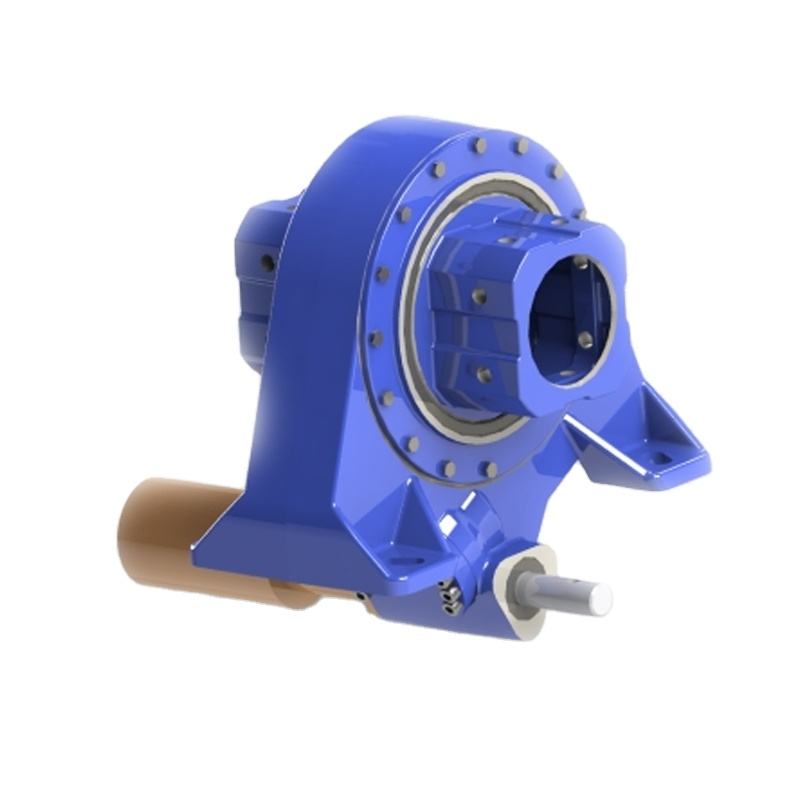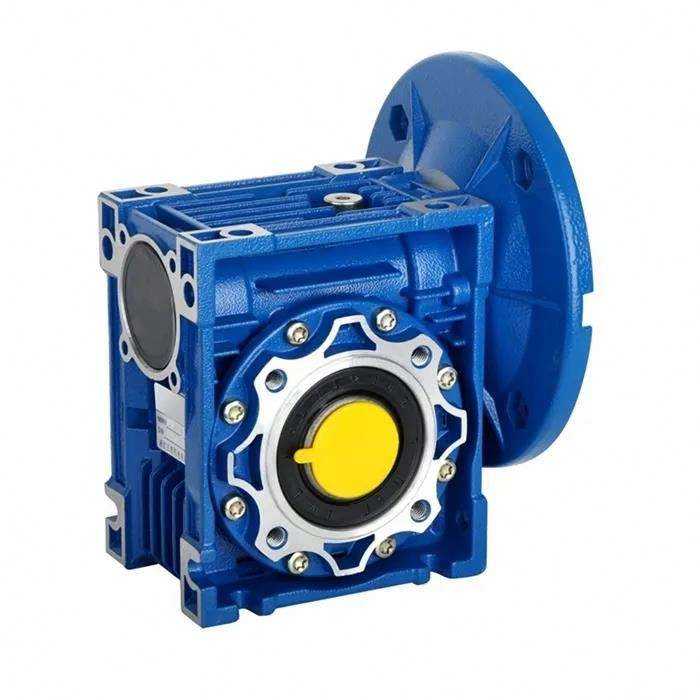

Imagine you’re in the middle of a procurement project for a new conveyor system. The line requires a compact, high-torque drive that can hold a heavy load without backdriving—even when the motor stops. Your engineering team mentions a worm gearbox, and you ask yourself, “What is a worm gearbox and how does it work?” Simply put, a worm gearbox consists of a threaded worm shaft meshing with a worm wheel. When the worm turns, it smoothly advances the teeth of the wheel, delivering substantial speed reduction and torque multiplication at a 90‑degree output. The geometry naturally provides a self-locking feature: the worm can drive the wheel, but the wheel cannot easily turn the worm. This makes Worm Gearboxes irreplaceable for lifts, escalators, grain augers, and heavy‑duty mixers. At Raydafon Technology Group Co.,Limited, we engineer worm gearboxes that address the real pain points of procurement managers—long lead times, inconsistent quality, and poor after‑sales support. Our solutions combine robust design with rapid customization, helping you avoid downtime and keep your production on schedule.
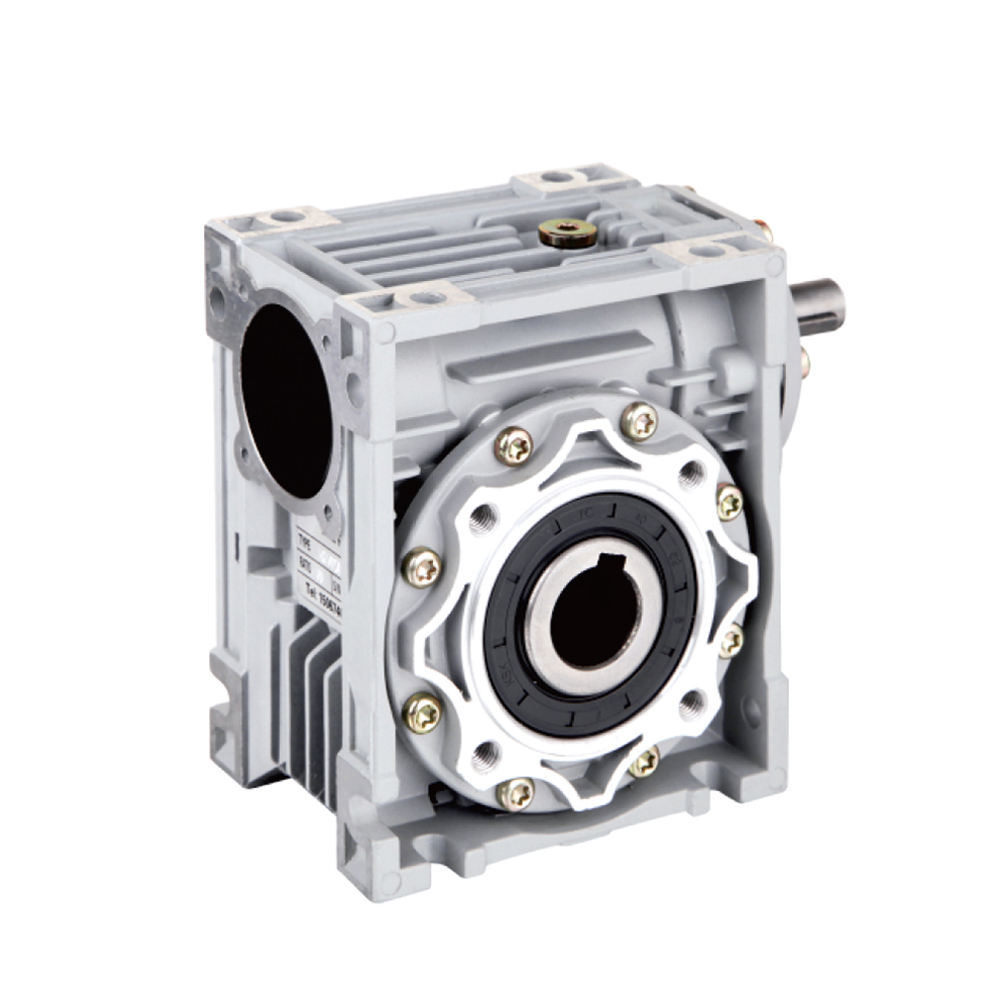
Procurement teams often tell us they must balance performance with budget. Worm gearboxes stand out because they deliver ratios up to 100:1 in a single stage, while keeping the footprint small. However, not all worm drives are created equal. The right material pairing and precision manufacturing determine how long the unit will run under continuous duty. Raydafon Technology Group Co.,Limited uses hardened and ground steel worms matched with centrifugally cast bronze worm wheels to give you the fatigue life your application demands.
Picture a grain elevator that must stop and hold 20 tons of material at any moment. If the drive backdrives, the bin smashes into the floor—creating a safety hazard and costly repairs. Standard helical boxes need external brakes, but a worm gearbox offers intrinsic self-locking. That means fewer components, simpler maintenance, and lower total cost. In wastewater treatment plants, scrapers and thickeners work round the clock in wet, abrasive conditions. A worm drive’s sealed housing and right‑angle output let you mount the motor vertically, saving space while protecting internal parts. Raydafon’s SUM series worm gearboxes come with IP65 sealing and optional breather plugs to handle condensation, a common failure point in chemical environments. Below is a quick comparison against a planetary gearbox for low‑speed/high‑torque tasks.
| Parameter | Worm Gearbox (Raydafon SUM) | Planetary Gearbox |
|---|---|---|
| Typical Ratio Range | 5:1 – 100:1 | 3:1 – 10:1 per stage (multiple stages needed for high ratios) |
| Self-Locking | Yes (dynamic and static) | No – requires brake |
| Efficiency | 50% – 85% | 94% – 97% per stage |
| Noise Level | Quiet (sliding contact) | Very quiet (rolling contact) |
| Footprint | Compact, right‑angle | Inline or coaxial; larger for multi‑stage high ratios |
| Maintenance Interval | 10,000 hours with synthetic oil | 20,000+ hours |
You face a procurement spreadsheet with dozens of sizes, ratios, and mounting positions. Choosing the wrong one leads to overloading and premature failure. Start with the mechanical requirements: output torque (Nm), input speed (RPM), and desired output speed. Then factor in duty cycle — is the machine running 8 hours a day or 24/7? A worm gearbox’s thermal capacity often limits its continuous rating, so you must check the thermal power rating against the mechanical power. If the gearbox runs hot, efficiency drops and oil degrades. Raydafon Technology Group Co.,Limited provides detailed rating tables and can even perform thermal imaging tests for custom applications. We also ask about ambient temperature, dust exposure, and shock load frequency—because a paper mill’s chipper drive is far more brutal than a bottling line. Let’s look at a typical selection scenario:
Scenario: A concrete mixer needs 800 Nm output at 30 RPM, input is from a 1450 RPM electric motor. Ratio ≈ 48:1. Service factor 1.5 for moderate shock. Raydafon’s SUM100 unit with 50:1 ratio delivers 950 Nm rated, thermal power 4.5 kW. With synthetic oil, it meets the 8‑hour mixing cycle without overheating.
| Selection Step | Key Data to Collect | Raydafon Support Tool |
|---|---|---|
| 1. Torque & Speed | Input kW, RPM; output RPM, Nm | Online ratio calculator |
| 2. Service Factor | Type of load (uniform, moderate shock, heavy shock) | Application chart |
| 3. Thermal Check | Ambient temp, ventilation, duty cycle | Thermal rating curves |
| 4. Mounting & Connection | Shaft orientation, flange type, motor interface | 3D CAD models |
| 5. Lifetime Requirement | Hours of operation, lubrication schedule | Bearing life analysis |
Over the years, procurement managers report three recurring headaches: oil leakage, excessive wear during break‑in, and noise after 12 months of service. Leakage usually starts at the input seal when internal pressure rises due to heat. Raydafon’s solutions include a dual‑lip Viton® seal with spring loading, and a breather that keeps housing pressure equalized. For wear, our worm gearboxes are shipped with a molybdenum disulfide run‑in compound that accelerates the bedding‑in process while protecting tooth flanks. After break‑in, we recommend synthetic polyalphaolefin gear oil that maintains viscosity at high temperatures, reducing friction and wear. Noise problems often stem from bearing clearance or misalignment. We use C3 clearance deep groove ball bearings and taper roller bearings on the output shaft, set with a precisely adjusted end float. Every gearbox goes through a 2‑hour loaded test at the factory, with vibration and sound level recorded. When a client reported 78 dB(A) on a competitor’s unit, our replacement SUM80 measured just 64 dB(A) under the same load—making the production floor noticeably quieter.
| Challenge | Root Cause | Raydafon Countermeasure | Result |
|---|---|---|---|
| Oil Leakage | Pressure build‑up, worn seal | Viton dual‑lip seal, breather plug | Zero leaks in 5,000‑cycle test |
| Rapid Wear | Insufficient break‑in, poor oil film | Pre‑coated MoS₂ compound, synthetic oil | 3‑phase wear pattern stabilized after 50 hours |
| Excessive Noise | Bearing play, misalignment | C3 bearings, tapered rollers, precision shimming | Noise reduced by 5‑8 dB(A) |
| Overheating | Undersized for thermal load | Ribbed housing, external fan kit option | Thermal capacity lifted 20% |
When your line depends on a rugged, self‑locking right‑angle drive, finding a supplier that understands your operating environment makes all the difference. Raydafon Technology Group Co.,Limited brings decades of drivetrain engineering and a portfolio of worm gearboxes built to endure dust, moisture, and around‑the‑clock cycles. We keep standard sizes in stock for urgent replacements, and our technical team can customize shaft designs, flange interfaces, or ratio sets within weeks. From the moment you reach out to us at [email protected], you get direct access to application engineers—not a call center. Visit us at https://www.raydafon-chains.com to browse CAD files and real‑world case studies. Let’s match the correct worm gearbox to your next machine build, so you can install it and forget it.
Zhang, L., & Wang, H. (2023). “Numerical analysis of elastohydrodynamic lubrication in double‑enveloping worm drives.” Tribology International, 182, 108345.
Kim, S. J., & Park, J. H. (2022). “Experimental investigation on efficiency improvement of a multi‑start worm gearbox using PAG oil.” Journal of Mechanical Science and Technology, 36(9), 4567‑4576.
Li, M., Chen, Y., & Zhao, T. (2021). “Topology optimization of worm gear housing for enhanced thermal dissipation.” Structural and Multidisciplinary Optimization, 64(5), 3012‑3028.
Yamada, H., & Tanaka, K. (2020). “Wear prediction of bronze worm wheels under boundary lubrication conditions.” Wear, 462‑463, 203510.
Johnson, R. P., & Smith, A. B. (2019). “Self‑locking characteristics of single‑start worm drives: a parametric study.” Mechanism and Machine Theory, 137, 218‑230.
Huang, X., & Liu, G. (2018). “Dynamic modeling and vibration analysis of a worm gearbox used in escalators.” Journal of Vibration and Acoustics, 140(4), 041012.
Robinson, M., & Davis, C. (2017). “Comparative lifecycle assessment of worm and helical gearboxes for industrial mixers.” Energy Conversion and Management, 148, 1027‑1035.
Chen, W., & Guo, Z. (2016). “Fault diagnosis of worm gearboxes using order tracking and envelope analysis.” Mechanical Systems and Signal Processing, 81, 318‑332.
Park, Y., & Lee, D. (2015). “Optimization of worm wheel tooth profile for reduced contact stress using genetic algorithm.” International Journal of Precision Engineering and Manufacturing, 16(11), 2323‑2331.
Abdelrahman, A., & Müller, J. (2014). “Influence of manufacturing errors on contact pattern in globoidal worm drives.” Forschung im Ingenieurwesen, 78(3‑4), 95‑104.