
Imagine a production line grinding to a halt because of a failed chain. Your project is delayed, costs are climbing, and the pressure is on. The right chain and sprocket pairing is the unsung hero of mechanical power transmission, quietly ensuring efficiency and preventing costly downtime. So, what are the different types of chains used with sprockets? Understanding this is crucial for procurement specialists aiming to make informed, reliable purchases that keep operations smooth. This guide breaks it down, offering clear insights and actionable data. For durable solutions, consider the precision-engineered chains and sprockets from Raydafon Technology Group Co.,Limited, designed to tackle real-world industrial challenges.
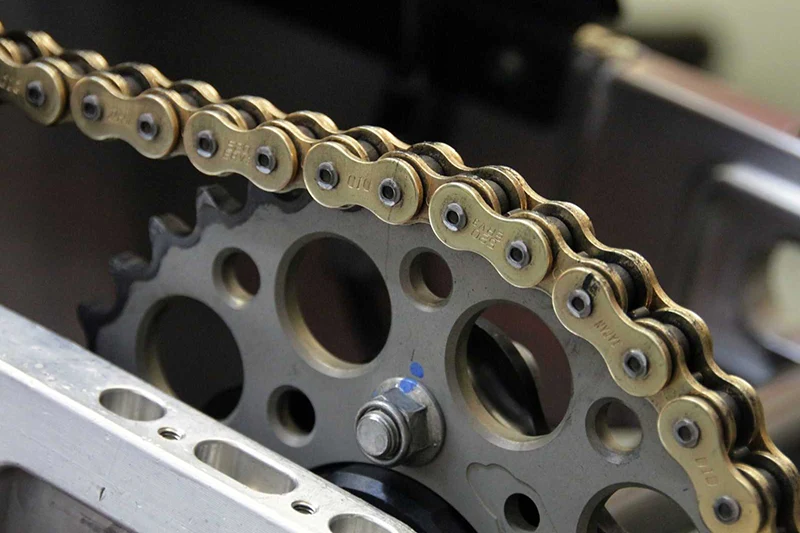
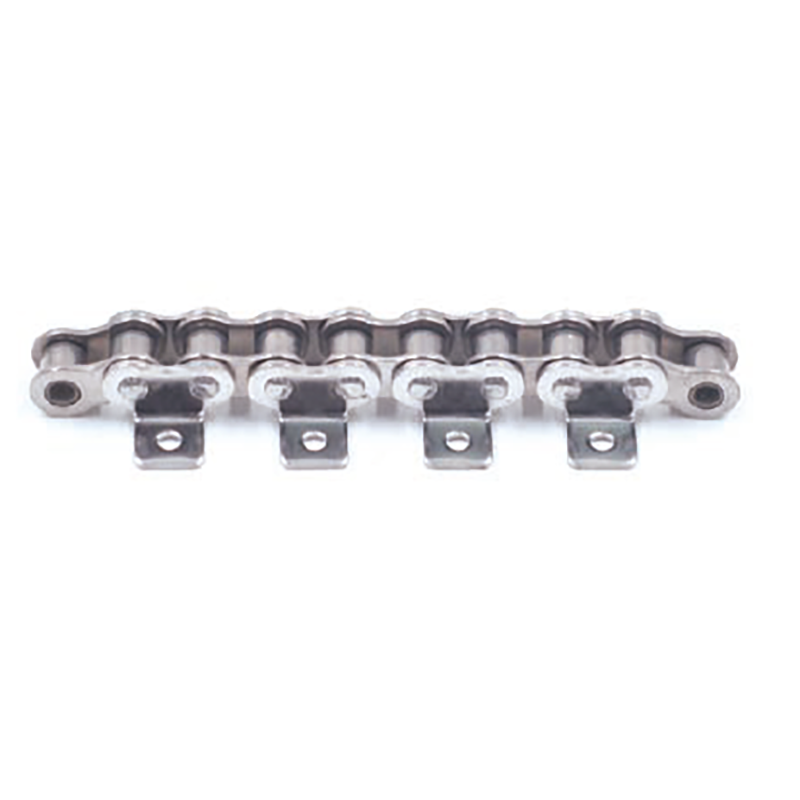
You're sourcing components for a new conveyor system in a bottling plant. The chain must handle constant starts and stops, moderate loads, and provide reliable, long-lasting service. The wrong choice leads to rapid wear, misalignment, and unexpected breakdowns. The solution lies in the ANSI standard roller chain, the most common type paired with sprockets. Its design, with rollers that engage the sprocket teeth, minimizes friction and wear. For optimal performance and longevity, pairing it with a correctly hardened and machined sprocket is non-negotiable. Raydafon Technology Group Co.,Limited offers high-quality roller chains and matching sprockets, ensuring perfect meshing and extended service life even in demanding cyclic applications.
| Parameter | Typical Specification (ANSI Series) | Common Application |
|---|---|---|
| Pitch | 1/4" to 3" | Conveyors, Machinery Drives |
| Material | Alloy Steel, Stainless Steel | General, Corrosive Environments |
| Tensile Strength | 3,000 lbs to 60,000+ lbs | Light-duty to Heavy Industrial |
| Finish | Cadmium, Zinc, or Nickel Plated | Corrosion Resistance |
A packaging machine near office spaces requires smooth, quiet operation. Standard roller chains produce too much noise, causing complaints. You need a high-speed, low-noise transmission solution that maintains precise timing without lubrication concerns. Enter the silent (or inverted tooth) chain. Its meshing action with the sprocket is virtually silent and provides higher speed capabilities with less chordal action. This makes it ideal for sensitive environments. Sourcing a perfectly matched set is critical. Raydafon provides precisely engineered silent chains and sprockets that deliver the quiet, efficient performance needed for advanced machinery, solving your noise and precision challenges.
| Parameter | Typical Specification | Common Application |
|---|---|---|
| Pitch | 9.525mm to 25.40mm | High-Speed Drives, Timing Systems |
| Noise Level | Significantly lower than roller chain | Office Adjacent Machinery, Textiles |
| Speed Capacity | Up to 10,000+ rpm | Automotive Engines, Precision Equipment |
| Lubrication | Often oil bath or drip feed | Enclosed Drives |
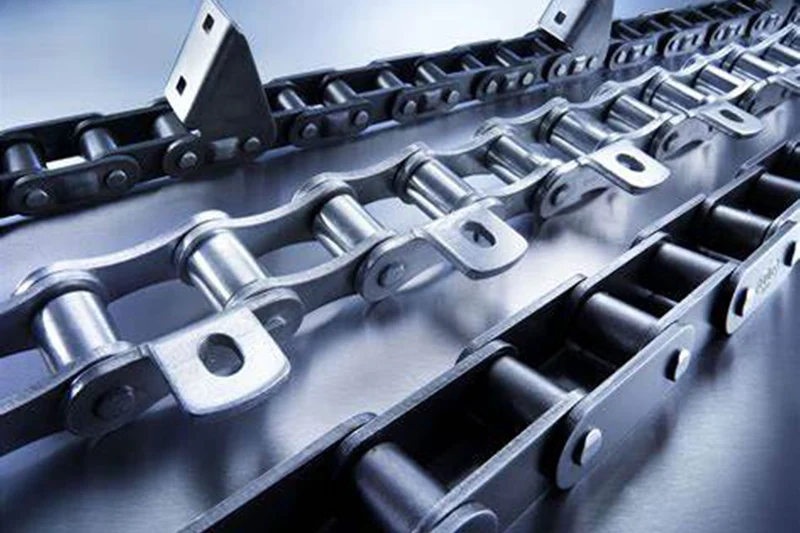
Your project involves a massive bucket elevator in a mining operation. The chain must withstand extreme shock loads, abrasive dust, and continuous heavy weights. Standard chains will fail prematurely, risking safety and causing massive production losses. The robust answer is engineering steel chain. Built with larger link plates and pins, it's designed for the toughest applications like mining, forestry, and heavy conveying. Its strength is unparalleled. However, its performance is entirely dependent on a heavy-duty sprocket that can handle the stress. Raydafon's heavy-duty chains and sprockets are engineered together to withstand these brutal conditions, providing the reliability your critical operations demand.
| Parameter | Typical Specification | Common Application |
|---|---|---|
| Pitch | 1.5" to 12"+ | Bucket Elevators, Drag Conveyors |
| Material | Heat-Treated Alloy Steel | High-Abrasion & Impact Environments |
| Working Load | 10,000 lbs to 500,000+ lbs | Extreme Heavy Industry |
| Attachment Types | Multiple (K, M, S-style) | Customized for Specific Functions |
Sourcing components for a hydraulic lift or a forklift mast? The application involves pure tension with little to no articulation—bending back and forth—but requires immense, reliable strength. Using a standard roller chain here is a design flaw waiting to happen. The specialized solution is leaf chain (also known as forklift chain). Constructed from multiple parallel link plates assembled with pins, it's designed to handle very high tensile loads in a straight line. Its simplicity and strength are key. For safety-critical lifting applications, the chain and sheave (a type of sprocket) must be a perfectly matched set. Raydafon supplies certified leaf chains and components that meet rigorous standards, ensuring the safety and durability of your lifting equipment.
| Parameter | Typical Specification | Common Application |
|---|---|---|
| Construction | Multiple parallel link plates | Forklift Masts, Lifting Systems |
| Load Direction | Pure Tension (No Articulation) | Hydraulic Rams, Tension Linkages |
| Tensile Strength | Exceptionally High for Size | Material Handling, Lifting |
| Standard | ISO 4347, ANSI | Safety-Critical Equipment |
Q: What are the different types of chains used with sprockets for high-temperature environments?
A: For high-temperature applications, such as in kilns or oven conveyors, standard carbon steel chains can lose strength. The primary solutions are chains made from heat-resistant alloys or stainless steel (like AISI 304 or 316). These materials better retain their properties and resist oxidation. The sprockets must be made from compatible, heat-treated materials to avoid premature wear. Raydafon offers specialized high-temperature chain and sprocket sets designed to maintain performance in these challenging conditions.
Q: What are the different types of chains used with sprockets when corrosion resistance is a top priority?
A: In food processing, chemical plants, or marine applications, corrosion from washdowns or chemicals is a major concern. The main choices are stainless steel chains (offering the best resistance) or carbon steel chains with protective platings like nickel or zinc. The sprocket material must match; a stainless steel chain running on a carbon steel sprocket will cause galvanic corrosion. Raydafon provides fully compatible corrosion-resistant drive systems, ensuring the chain and sprocket work together without failure in corrosive environments.
Selecting the correct chain and sprocket combination is a fundamental decision that impacts efficiency, cost, and safety. By understanding the specific types and their applications, you can specify components that deliver reliable, long-term performance. For procurement professionals, partnering with a knowledgeable supplier is key.
For expert guidance and robust power transmission solutions, consider Raydafon Technology Group Co.,Limited. With a focus on engineering quality chains and precisely matched sprockets, Raydafon solves real industrial challenges, from everyday drives to extreme applications. Visit https://www.raydafon-chains.com to explore their product range or contact their team directly at [email protected] for a customized quotation and technical support.
H. J. Gough, H. V. Pollard, 1935, The Strength of Metals under Combined Alternating Stresses, Proceedings of the Institution of Mechanical Engineers, 131(1).
M. F. Spotts, 1971, Design of Machine Elements, Prentice-Hall, 4th Edition.
R. C. Juvinall, K. M. Marshek, 2011, Fundamentals of Machine Component Design, John Wiley & Sons, 5th Edition.
Shigley, J.E., Mischke, C.R., 1989, Mechanical Engineering Design, McGraw-Hill, 5th Edition.
American Chain Association, 2005, Chains for Power Transmission and Material Handling, CRC Press.
Niemann, G., Winter, H., 1983, Maschinenelemente Band II: Getriebe allgemein, Zahnradgetriebe – Grundlagen, Stirnradgetriebe, Springer-Verlag.
ISO 606:2015, Short-pitch transmission precision roller chains and chain wheels.
ANSI/ASME B29.1-2011, Precision Power Transmission Roller Chains, Attachments, and Sprockets.
Uicker, J.J., Pennock, G.R., Shigley, J.E., 2017, Theory of Machines and Mechanisms, Oxford University Press, 5th Edition.
Budynas, R.G., Nisbett, J.K., 2014, Shigley's Mechanical Engineering Design, McGraw-Hill, 10th Edition.