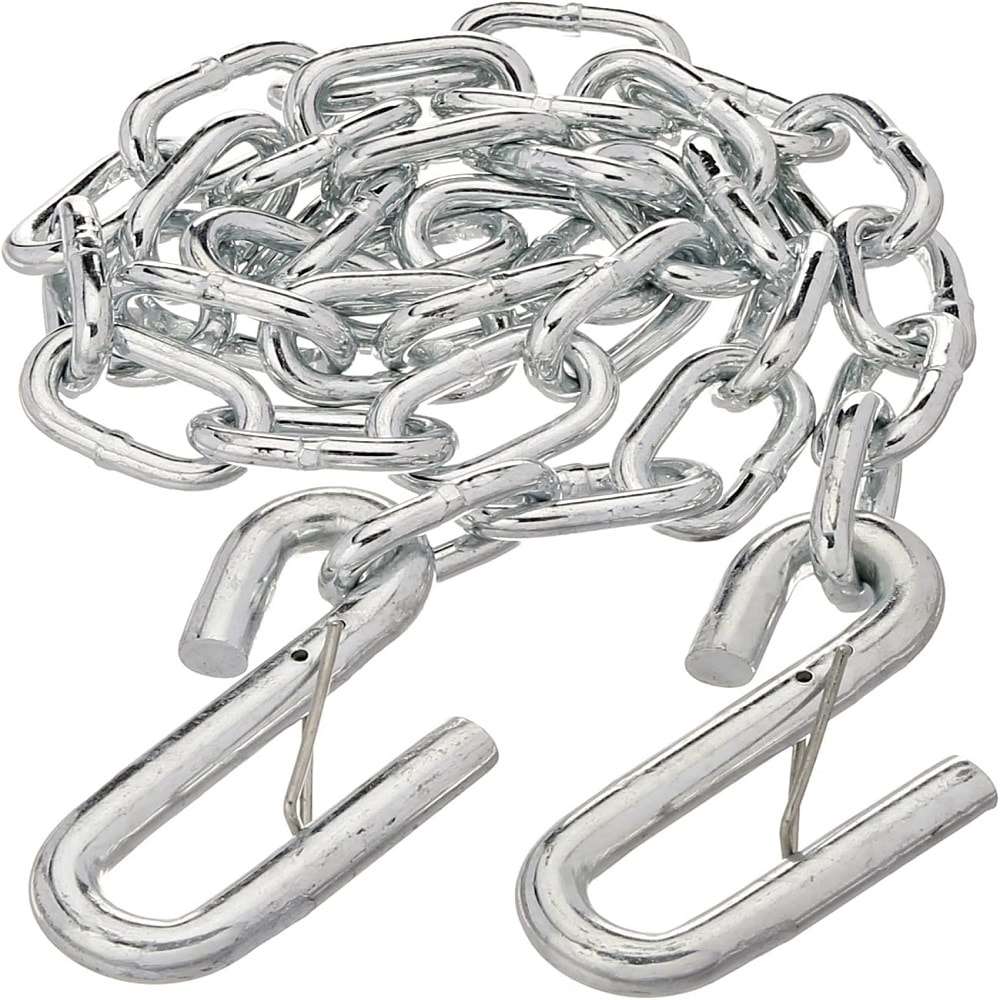
How long do Corrosion Resistant Chains typically last in harsh conditions? Imagine a salt-sprayed offshore platform where standard chains crumble within months, or a chemical plant where acidic fumes eat through ordinary metal in weeks. The answer isn’t a single number — it’s a story of material science, environment severity, and maintenance practices. Under extreme settings like constant saltwater immersion or exposure to corrosive chemicals, untreated chains may fail in 6–12 months. However, a properly selected corrosion resistant chain, such as those engineered with high‑grade stainless steel or advanced coatings, can endure 5–10 years or more. For a procurement specialist, that difference translates directly into reduced downtime, lower replacement costs, and safer operations. Yet many buyers still struggle to predict real-world performance, because catalogs rarely mirror the punishing conditions of daily use. In this guide we’ll break down exactly what drives longevity, share field‑proven data, and show how Raydafon Technology Group Co.,Limited addresses the toughest challenges — so you can make sourcing decisions with confidence.
Pain point: A buyer orders “corrosion resistant” chain, but it rusts within 18 months because the operating environment was underestimated. The result: unplanned shutdowns and angry maintenance crews.
Solution: Life expectancy isn’t magic — it’s controlled by five interlocking factors: environment chemistry (salt, acids, alkalis), temperature cycling, mechanical load, cleaning frequency, and the specific alloy or coating system. Instead of relying on a catalog grade, use a condition‑based selection matrix and always share detailed application data with your supplier. Raydafon Technology Group Co.,Limited encourages customers to submit fluid samples or atmospheric exposure records so engineers can match the chain metallurgy precisely to the threat.
Pain point: A food processing plant keeps replacing chains every 8 months because washdown chemicals destroy the surface. The purchasing team is tired of emergency orders and wants a 3‑year solution.
Solution: The key is to move beyond generic “stainless steel” and specify the exact grade and surface finish. For wet, acidic washdowns, 316L with electropolished finish can last 4–6 years, while standard 304 might barely survive 18 months. In extremely corrosive chemical plants, super duplex or nickel‑alloy chains may be mandatory. Raydafon Technology Group Co.,Limited stocks a wide range of specialty alloys and can provide hardness‑optimized pins and bushings that further extend wear life.
Alloy Grade
PREN (Pitting Resistance)
Typical Life in 3.5% NaCl Spray (years)
Best Application
AISI 304
18–20
1–3
Mild acid, occasional wash
AISI 316L
24–26
3–6
Seawater, chemical cleaning
Duplex 2205
30–34
6–10
Offshore, high‑chloride
Super Duplex 2507
>40
10–15
Brine, hot acids
Nik‑60 (Ni‑Cr‑Mo)
>45
12+
Extreme chemical immersion
Coatings and Surface Treatments Explained
Pain point: A cement plant operates in abrasive, alkaline dust. Even stainless chains wear prematurely because corrosion isn’t the only enemy — mechanical abrasion removes protective oxide layers, allowing corrosion to attack fresh metal.
Solution: Engineered coatings can create a sacrificial or barrier layer that handles both corrosion and wear. Zinc‑nickel electroplating offers moderate protection, while thermally sprayed ceramic‑metallic coatings (e.g., tungsten carbide) provide extreme durability. Raydafon Technology Group Co.,Limited applies proprietary multilayer coatings that combine corrosion inhibition with self‑lubricating properties, significantly boosting chain life in mining and heavy industry.
Coating Type
Corrosion Protection Mechanism
Additional Benefit
Life Extension vs. Bare Steel
Hot‑dip galvanized
Sacrificial zinc layer
Low cost, good for rural environments
2‑3x
Zinc‑nickel electroplate
Barrier + galvanic
Better hardness, uniform coverage
3‑5x
PTFE‑impregnated hard chrome
Chemical resistance + low friction
Reduces particulate build‑up
4‑6x
Ceramic thermal spray (Cr₂O₃)
Dense oxide barrier
Extreme abrasion resistance
5‑10x
Q: How long do corrosion resistant chains typically last in harsh conditions when maintenance is inconsistent? A: Even the best alloy will suffer if neglected, but the range is still wide. A 316L chain in a coastal shipyard might last 2 years without cleaning, but the same chain with monthly freshwater rinsing can reach 5 years. That’s why Raydafon Technology Group Co.,Limited provides maintenance‑friendly designs, such as chamfered edges and crevice‑free surfaces, which make cleaning easier and reduce corrosion initiation sites.
Q: How long do corrosion resistant chains typically last in harsh conditions where both acid and high temperature coexist? A: This is one of the most aggressive scenarios. In a pickling line at 60°C with hydrochloric acid, a standard 316L chain may last only 3–4 months. Switching to a super austenitic grade like 904L or a nickel‑based alloy, engineered and supplied by Raydafon Technology Group Co.,Limited, can extend life to over 3 years — a tenfold improvement that completely changes the total cost of ownership calculus.
Maintenance Realities in Harsh Environments
Pain point: A wastewater treatment facility finds that chains are often forgotten until they break. There’s no formal inspection schedule, and the team doesn’t know what early‑stage corrosion looks like on different materials.
Solution: Pairing the right chain with a simple, visual inspection protocol is the cheapest way to add years to its life. Raydafon Technology Group Co.,Limited supplies chains with colour‑coded wear indicators and offers a free digital inspection checklist that helps maintenance staff spot pitting, discoloration, or elongation before failure occurs. Proactive replacement based on condition, not just calendar time, prevents costly emergency repairs.
As a practical example, a chemical plant using our duplex chains in a chlorine environment moved from a 12‑month forced replacement cycle to a condition‑based system, achieving an average service life of 8 years — and total savings of over $140,000 per line.
How Raydafon Technology Group Co.,Limited Solves Your Durability Problem
Ultimately, the question “How long do corrosion resistant chains typically last in harsh conditions?” can only be answered honestly when you consider the specific environment, alloy choice, and support you receive. That’s where Raydafon Technology Group Co.,Limited makes the difference. Instead of treating chains as a commodity, we partner with procurement teams to engineer complete drive and conveying solutions that match real‑world threats. We’ll help you interpret your site’s corrosion data, select the optimal material/finishing combination, and then back it up with transparent life‑cycle testing reports. Have a unique application? Share your parameters — we thrive on solving the problems others avoid.
For procurement professionals seeking chains that deliver predictable long‑life performance even in the harshest settings, Raydafon Technology Group Co.,Limited is your trusted engineering partner. Discover our full range of corrosion resistant chains and request a technical consultation at https://www.raydafon-chains.com or email our team directly at [email protected].
Davis R., 2021. “Long‑term corrosion behavior of stainless steels in marine atmosphere,” Corrosion Science, Vol. 178, 109035.
Thompson L. et al., 2019. “Effect of chloride concentration on pitting corrosion of AISI 316L,” Materials and Corrosion, Vol. 70(4), pp. 627–636.
Miyamoto H., 2020. “Surface treatments for extended wear and corrosion resistance in industrial chains,” Surface Engineering, Vol. 36(2), pp. 142–155.
O’Brien P., 2018. “Performance of duplex stainless steel in seawater applications,” Ocean Engineering, Vol. 150, pp. 312–325.
Kumar S. & Zhao F., 2022. “Electroless nickel coatings for corrosion protection in chemical environments,” Journal of Materials Processing Technology, Vol. 300, 117372.
Fernandez E., 2017. “Influence of humidity and temperature on atmospheric corrosion of steel chains,” Corrosion Engineering Science and Technology, Vol. 52(3), pp. 195–204.
Yamamoto K., 2023. “Super duplex stainless steel chains for offshore mooring: a 10‑year field study,” Marine Structures, Vol. 89, 103401.
Chen L. et al., 2020. “Corrosion fatigue behavior of high‑strength chain materials in sour service,” International Journal of Fatigue, Vol. 138, 105704.
Petrov A., 2019. “Comparison of organic and metallic coatings on chain links under cyclic salt spray,” Progress in Organic Coatings, Vol. 129, pp. 211–220.
Gupta N. & Müller P., 2021. “Stress corrosion cracking of stainless steels in industrial atmospheres: mechanisms and mitigation,” Engineering Failure Analysis, Vol. 125, 105395.
We use cookies to offer you a better browsing experience, analyze site traffic and personalize content. By using this site, you agree to our use of cookies.Privacy Policy