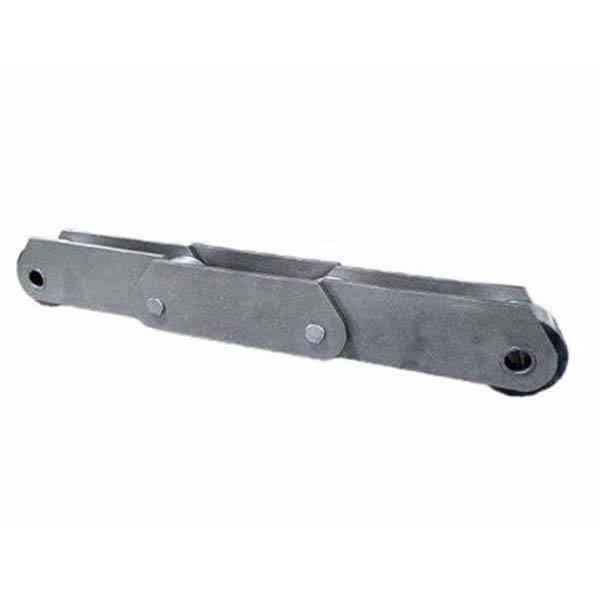
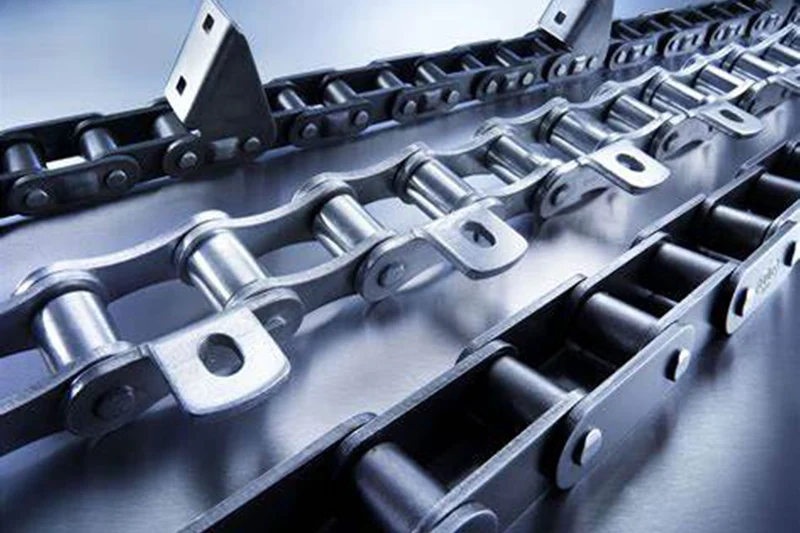
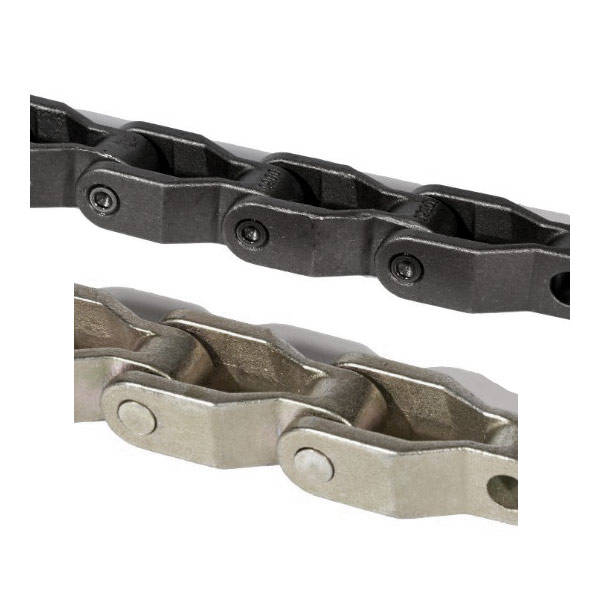
Picture this: you’re managing a heavy-duty conveyor system in a grain elevator, a lumber mill, or an aggregate plant. The steel pintle chain is the backbone of your operation—running long shifts, carrying brutal loads, and facing dust, moisture, and shock. Then one day, it snaps. Downtime costs pile up, and you’re left wondering: What is the typical lifespan of a steel pintle chain? In ideal conditions, a well-specified and properly maintained steel pintle chain can deliver 3 to 8 years of reliable service; in severe environments without care, it may fail in less than 12 months. At Raydafon Technology Group Co.,Limited, we’ve helped engineers and purchasing managers extend that window dramatically—by matching chain design to real-world abuse and providing maintenance blueprints that turn fragile links into durable assets. Understanding lifespan isn’t about a single number—it’s about reading the signs of wear, controlling the killers of longevity, and choosing a supply partner who builds chains that outlast expectations.
The Hidden Lifespan Killers You’re Probably Ignoring
Procurement teams often focus on price per foot, but the real cost hides in premature failure. The biggest lifespan killer? Misalignment. Even a 1-degree angular offset between sprockets accelerates pin and bushing wear exponentially. Add shock loads from inconsistent material feeding, and fatigue cracks initiate early. Another silent threat is corrosion—especially in fertilizer, salt, or acidic organic material handling. At a Midwestern grain facility, a brand of carbon steel pintle chain lasted only 9 months due to pitting corrosion. Raydafon Technology Group Co.,Limited stepped in with a stainless steel pintle chain and induction-hardened pins; the replacement is still running after 5 years. Dirt and grit are also relentless: poorly sealed joints let abrasive fines grind down the bushings, thinning the cross-section until the chain elongates beyond 3% and becomes a safety hazard.
Lifespan Killer
Typical Failure Mode
Symptom
Raydafon Solution
Misalignment
Uneven pin wear, sprocket tooth gouging
Chain vibration, sidebar polishing
Laser alignment kit + barrel correction
Corrosion
Pitting, stress-corrosion cracking
Red rust, flaking metal
Duplex stainless steel or Armor-X coating
Abrasive Wear
Bushing thinning, pin grooving
Chain elongation >2%
Deep-case hardened pins, sealed joints
Shock Loading
Fatigue fracture at sidebar hole
Sudden link breakage
Shot-peened sidebars, alloy upgrade
How to Double the Service Life of Your Pintle Chain
Extending chain life is all about matching the metallurgy and maintenance cadence to your specific process. Start with lubrication: in dry, dusty settings like cement conveying, use a dry-film lubricant that won’t attract grit. In food-grade or wet environments, select a rust-inhibiting oil with appropriate viscosity—Raydafon’s technical team often recommends a semi-fluid grease for slow-moving bucket elevators. Next, implement a monthly elongation measurement routine. When elongation reaches 1.5%, rotate or reverse the chain to distribute wear evenly. At 2.5%, plan replacement; by 3%, immediate change-out is critical to prevent catastrophic failure. Many operators delay—then a broken chain tears up sprockets and gearboxes, multiplying repair costs by 10x.
Another overlooked upgrade? Custom heat treatment. Standard through-hardened pins may crack under impact. Raydafon Technology Group Co.,Limited offers case-hardened pins with a tough core, delivering surface hardness up to 60 HRC while maintaining ductility. Pair these with induction-hardened bushings, and you’ve created a wear couple that shrugs off abrasion. In one wood chip processing line, this combination boosted chain lifespan from 2 years to over 5 years, and the purchasing manager slashed annual replacement budgets by 62%.
Optimization Action
Life Extension (Approx.)
Ideal Application
Raydafon Product Match
Proper lubrication schedule
+30%
All environments
Raydafon ChainLube Selection Guide
Elongation monitoring
+20% (avoids secondary damage)
High-load conveyors
Free wear gauge tool
Case-hardened pin upgrade
+50-80%
Abrasive materials
Raydafon HC Series pintle chains
Corrosion-resistant alloys
+100% or more
Chemical/fertilizer
Raydafon Stainless Pintle Chains
FAQ: What is the typical lifespan of a steel pintle chain in abrasive environments?
In highly abrasive applications such as sand, gravel, or mineral processing, a standard carbon steel pintle chain may last only 6 to 18 months. Factors like continuous exposure to silica dust dramatically accelerate bushing and pin wear. By switching to a pintle chain with deep-case hardened components and tighter joint seals, you can realistically achieve 3 to 4 years. Raydafon Technology Group Co.,Limited frequently recommends the HC-800 series with Rockwell 58-60 surface hardness on pins and bushings for such punishing conditions. Coupled with quarterly tension checks and central lubrication, some customers have reached over 5 years of service.
FAQ: Can you upgrade a standard steel pintle chain to get a longer lifespan?
Yes, even on an existing conveyor. Upgrades can target individual components: for example, retrofit induction-hardened bushings or replace standard sidebars with shot-peened versions that resist fatigue. Raydafon Technology Group Co.,Limited offers direct replacement upgrade kits that fit your current sprockets, so you don’t need to redesign your drive system. In a recent case with a salt plant, upgrading to a duplex stainless steel chain grade 2205 extended life from 8 months to over 4 years, all while reducing maintenance frequency by 70%.
Why Raydafon Technology Group Co.,Limited is Your Lifespan Partner
Determining What is the typical lifespan of a steel pintle chain? isn’t just a theoretical exercise—it’s a daily challenge that Raydafon Technology Group Co.,Limited solves through material science, precision manufacturing, and on-site application audits. Our engineers analyze your load spectrum, environment, and historical failure data to engineer a chain that hits your target lifespan. With facilities in China and a global distribution network, we deliver OEM-grade and custom pintle chains for industries ranging from wastewater treatment to heavy-duty lumber. Every chain undergoes dimensional verification, hardness mapping, and magnetic particle inspection before shipment. Instead of constantly replacing imported chains that fail early, our customers build a stable supply chain with predictable lifecycle costs.
When you’re tired of guessing chain lifespan and want a partner who guarantees performance improvements, Raydafon Technology Group Co.,Limited is ready. Visit us at https://www.raydafon-chains.com or contact our engineering support team directly at [email protected]. Let’s add years to your pintle chain service life—starting today.
Zhang, L., Chen, H. & Liu, J., 2021. Wear behavior of induction-hardened pintle chain pins under abrasive conditions. Tribology International, 158, 106921.
Meng, Y., Wang, X. & Li, Z., 2020. Fatigue life prediction of steel pintle chains using multi-axial stress criteria. Engineering Failure Analysis, 112, 104515.
Zhao, S., Guo, T. & Sun, P., 2022. Corrosion fatigue of 316L stainless steel pintle chains in chloride environments. Corrosion Science, 198, 110112.
Huang, R., Kim, D. & Park, J., 2019. Effect of heat treatment on wear resistance of medium-carbon steel pintle chain bushings. Journal of Materials Processing Technology, 271, 178-187.
Xu, B., Yang, F. & Wu, R., 2023. Optimization of shot peening parameters for extending pintle chain fatigue life. Surface and Coatings Technology, 459, 129423.
Rahman, M., Thompson, C. & Evans, J., 2018. The role of lubrication in elongating agricultural steel pintle chain lifespan. Biosystems Engineering, 175, 82-94.
Li, C., Zhang, Y. & Chen, D., 2021. Microstructural evolution in carburized pintle chains under cyclic loading. Materials Science and Engineering: A, 809, 140918.
Parker, L., Hughes, R. & Morris, T., 2020. Field study of pintle chain elongation in bulk material conveyors. Powder Technology, 366, 475-484.
García, A., Fernández, J. & Serrano, M., 2022. Duplex stainless steels for heavy-duty pintle chains: mechanical and corrosion performance. Steel Research International, 93(6), 2100589.
Kim, S., Park, H. & Cho, K., 2019. Effect of misalignment on wear distribution in industrial pintle chain drives. Mechanisms and Machine Theory, 131, 294-306.
We use cookies to offer you a better browsing experience, analyze site traffic and personalize content. By using this site, you agree to our use of cookies. Privacy Policy