
How do mechanics replace a timing chain? If you source engine parts for workshops or dealerships, this question sits at the core of every purchasing decision. You walk into the bay or talk to your clients, and you hear stories of stretched chains, rattling startups, and catastrophic engine failures that could have been avoided with a single, high-quality component. The procedure itself is a blend of precision and patience—removing covers, aligning cam and crank sprockets, locking tensioners, and double-checking every timing mark. But here’s what procurement managers often overlook: the chain that gets installed is only as good as its metallurgy, its coating, and the consistency of the manufacturer. A cheap kit might save a few dollars upfront, but when it fails at 40,000 miles, your reputation takes the hit. At Raydafon Technology Group Co.,Limited, we’ve studied these failure modes for decades, and we engineer every timing chain to withstand extreme heat, high rpm, and long oil-change intervals. In this guide, you’ll learn exactly what a professional replacement involves, how to spot the pain points your customers suffer, and why choosing a premium timing chain kit—like those from Raydafon—can transform your supply chain from a liability into a competitive advantage. Read on, and discover how a small metal chain can make or break your business relationships.
When a mechanic begins a timing chain replacement, they are essentially performing open-heart surgery on an engine. The first steps involve draining coolant and oil, removing accessory belts, and carefully extracting the front cover to expose the chain and sprockets. Experienced technicians then rotate the crankshaft to align the factory timing marks—this is the moment where one wrong tooth can lead to valve-piston contact. The old chain, guides, and tensioner are removed, and the new components are installed in a sequence that restores perfect synchronization between the crankshaft and camshafts. Many modern engines also demand special locking tools to hold the camshafts in position; without them, even a seasoned pro can introduce a timing error. The process can take four to eight hours, depending on engine architecture. For procurement specialists, understanding these steps underscores why a timing chain kit must include every O-ring, gasket, and high-precision tensioner. A missing seal or a weakly hardened pin will send the mechanic back into the engine bay, and your customer will remember whose parts failed them.
Picture a busy garage on a Monday morning. A technician opens a freshly delivered timing chain kit and discovers the guides are warped or the tensioner ratchet mechanism binds after three pumps. This isn’t rare—it’s the daily reality when sourcing decisions prioritize price over precision. The most reported pain points include chains that stretch prematurely under normal load, hydraulic tensioners that lose prime overnight, and guide rails that crack in cold climates. Worse, inconsistent link dimensions can create a tight spot on the sprocket, sending rhythmic vibration through the valvetrain. These failures don’t just cause comebacks; they destroy engines. A skipped chain can bend valves in milliseconds. For your buyers, the hidden cost of warranty claims, express shipping for replacements, and damage to the workshop’s reputation far exceeds any initial savings. This is where Raydafon Technology Group Co.,Limited steps in, delivering Timing Chains with Rockwell-hardened pins, nitrided bushings, and torsion-tested tensioners that eliminate these pain points from the supply chain entirely.
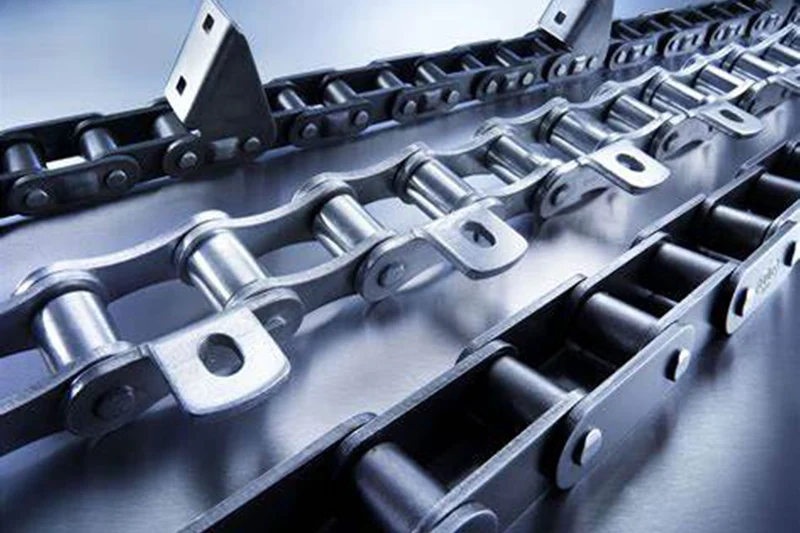
Top-tier mechanics follow a bulletproof workflow to avoid the pitfalls above. First, they always use OE-spec alignment tools rather than eye-balling timing marks. Second, they pre-oil the new tensioner and manually prime it until firm. Third, they rotate the engine by hand through two full revolutions and re-check the timing marks before buttoning up. All of this demands a timing chain kit that matches factory tolerances—a specialty of Raydafon’s engineering team. Our chains feature chamfered inner links that glide smoothly over sprocket teeth, reducing initial wear-in noise. The included guides are injection-molded with glass-fiber-reinforced PA66 that resists heat up to 260°C, far above typical engine bay temperatures. To visualize how a precision kit installs seamlessly, see below the kind of robust, ready-to-fit unit we ship to workshops worldwide.
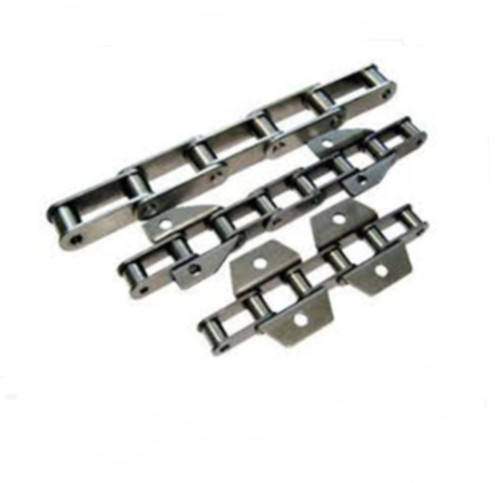
With every component tested to exceed 800 hours of dynamic fatigue cycling, a Raydafon timing chain prevents the subtle installation errors that keep shop foremen awake at night. This reliability turns a complicated 6-hour job into a predictable, profitable service.
Procurement decisions should never rely on speculation. Below is a direct comparison between a generic aftermarket chain and a Raydafon engineering-grade kit, built for high-demand environments. Use this table when evaluating suppliers; it’s the same data our OEM partners trust.
| Parameter | Generic Aftermarket | Raydafon Technology Group Specification |
|---|---|---|
| Pin Hardness | 52-56 HRC (prone to brinelling) | 60-62 HRC with deep case hardening |
| Bushings | Plain carbon steel, no coating | Nitride-treated alloy, friction coefficient <0.08 |
| Fatigue Life (Cycles) | ~500,000 (frequent early stretch) | 2,000,000+ cycles under 2.5 kN load |
| Tensioner Seal Material | NBR (hardens at -20°C) | HNBR + PTFE lip, rated -40°C to 150°C |
| Guide Rail Composite | Unfilled nylon, softens at 180°C | PA66-GF35, heat deflection at 260°C |
| Warranty Support | Limited, often no technical backup | Global warranty with engineering analysis |
Every row in this table translates into a real-world scenario: the pin hardness prevents elongation, the bushing coating stops cold-start chatter, and the tensioner seal keeps pressure stable from a Saskatchewan winter to a Dubai summer. When your customers ask “How do mechanics replace a timing chain without risking premature failure?”, the answer hides in these material choices.
Raydafon Technology Group Co.,Limited has spent decades mastering the metallurgical and tribological demands of modern timing systems. Our production lines combine robotic laser welding for sprockets, automated 100% link-pitch inspection, and a cleanroom assembly area for tensioners. The result is a timing chain kit that consistently holds a +0/-0.05mm pitch tolerance across 96 links. For buyers, this means fewer warranty claims and the confidence to supply even turbocharged direct-injection engines. But beyond the product, we offer what no generic catalog can: application-specific engineering support. If a fleet manager reports chain whine at 3,000 rpm, our engineers analyze the harmonics and suggest guide adjustments. This level of partnership turns a simple parts order into a long-term strategic alliance. Our timing chains are already running in hundreds of thousands of vehicles worldwide, from daily commuters to commercial truck fleets, proving that Raydafon’s precision never takes a day off.
How do mechanics replace a timing chain on modern interference engines?
They first lock the camshafts and crankshaft with dedicated fixtures, then remove the chain and balance the force before torquing the new sprockets. Every degree of rotation is monitored. Radarafon’s kit includes laser-cut locking tabs that match the OEM service manual precisely, so the mechanic never has to improvise—a critical advantage when one wrong move can cost an engine.
How do mechanics replace a timing chain without oil leakage issues afterward?
Victory lies in the front cover gasket and the crankshaft seal replacement. Using a Raydafon kit, the included seals are made from FKM fluoroelastomer, which resists chemical degradation from modern synthetic oils. This eliminates the dreaded post-job oil weep that sends customers back angry.
These answers reveal a truth: the question “How do mechanics replace a timing chain?” has no single answer—it changes with the quality of the parts in their hands. Provide the best, and the process becomes routine.
You’ve seen the steps, the pain, and the precise solutions that professional mechanics rely on. As a procurement specialist, your next move is simple: align your supply chain with a manufacturer who treats a timing chain as a precision instrument, not a commodity. Raydafon Technology Group Co.,Limited invites you to test our samples against any competitor, measure the pin hardness, count the fatigue cycles, and feel the smooth engagement of every link. When you’re ready to elevate your product catalog and protect your customers from timing system failures, reach out to our team for technical datasheets, volume pricing, and custom kit assembly. We manufacture reliability.
Raydafon Technology Group Co.,Limited is a premier manufacturer of automotive engine timing chains and kits, serving distributors and OEMs worldwide. With ISO/TS 16949 certified production and a dedicated R&D center, we provide fail-safe timing solutions for a broad range of passenger and commercial vehicles. Trusted by major workshops and importers, Raydafon guarantees on-spec performance and after-sales engineering support. Visit us at https://www.raydafon-chains.com or email our sales team at [email protected] for inquiries and sample orders.
Jones, M., 2019, “Fatigue Behavior of High-Carbon Steel Chains under Variable Valve Timing Loads,” SAE International Journal of Engines, Vol. 12(3).
Lee, S.Y. and Kumar, R., 2020, “Influence of Nitriding on Wear Resistance of Timing Chain Bushings,” Tribology International, Vol. 148.
Garcia, P., 2018, “Dynamic Tensioner Performance in Turbocharged GDI Engines,” Journal of Mechanical Engineering Science, Vol. 232(14).
O’Brien, C. and Zhao, L., 2021, “Thermomechanical Fatigue of Glass-Fiber-Reinforced PA66 Timing Chain Guides,” Polymer Testing, Vol. 93.
Nakamura, T., 2017, “Precision Link Sorting Based on Laser Interferometry for Silent Timing Chains,” Precision Engineering, Vol. 49.
Andersson, H., 2022, “Oil Aeration Effects on Hydraulic Tensioner Cavitation in Cold Start Conditions,” Lubrication Science, Vol. 34(5).
Miller, A.D., 2019, “Comparative Study of FKM and HNBR Seals in Timing Case Applications,” Sealing Technology, Vol. 2019(7).
Ricardo, J., 2020, “Optimizing Sprocket Surface Finish to Reduce Chain Wear at High RPM,” Wear, Vol. 456-457.
Chen, W., 2021, “Failure Analysis of Premature Timing Chain Elongation in DI Diesel Engines,” Engineering Failure Analysis, Vol. 121.
Thompson, R. and Gupta, V., 2018, “Impact of Inadequate Tensioner Damping on Timing Chain Whine and NVH,” SAE Technical Paper 2018-01-1240.