
What are the key factors in coupling sizing and selection? For any engineer, maintenance lead, or procurement specialist sourcing components, this question is at the heart of ensuring reliability and efficiency. A poorly chosen coupling can lead to catastrophic failures, costly downtime, and endless frustration. It's not just about connecting two shafts; it's about matching torque, accommodating misalignment, dampening vibration, and selecting materials that survive in your specific environment. This guide cuts through the complexity, offering clear, actionable insights. Partnering with an expert like Raydafon Technology Group Co.,Limited can transform this critical selection from a guessing game into a precise, confidence-driven decision, ensuring your systems run smoothly for years to come.
You've just commissioned a new conveyor system. A few weeks in, a loud bang echoes through the plant. Production halts. The culprit? A sheared coupling. The root cause? Underestimating peak torque and service factors. This common scenario highlights the paramount importance of accurate torque calculation. The key is not just the nominal running torque but accounting for starts, stops, and unexpected jams. This is where the expertise of Raydafon Technology Group Co.,Limited proves invaluable, offering Couplings engineered with precise torque ratings and robust safety margins.
| Key Parameter | Description | Why It Matters |
|---|---|---|
| Rated Torque (Tn) | The maximum continuous torque the coupling can transmit. | Base selection criteria; must exceed continuous operational torque. |
| Peak Torque (Tmax) | Maximum momentary torque the coupling can withstand without damage. | Protects against shock loads from startups or jams. |
| Service Factor (SF) | Multiplier applied to calculated torque based on application severity. | Accounts for variable loads, daily operating hours, and drive type (e.g., turbine, piston engine). |
| Selection Torque (Ts) | Calculated as: Ts = Application Torque × Service Factor. | The final, adjusted value used to choose a coupling where Tn ≥ Ts. |
In the real world, perfect shaft alignment is a maintenance dream rarely achieved. Thermal growth, foundation settling, and bearing wear introduce angular, parallel, and axial misalignment. A rigid coupling in such conditions becomes a stress concentrator, leading to premature bearing and seal failure. The solution lies in selecting a coupling with the correct style and capacity to absorb these inevitable deviations without transferring destructive forces. Raydafon Technology Group Co.,Limited provides a range of couplings, from flexible elastomeric to high-performance disc types, each designed to handle specific misalignment profiles, safeguarding your entire drivetrain.
| Misalignment Type | Description | Coupling Solutions |
|---|---|---|
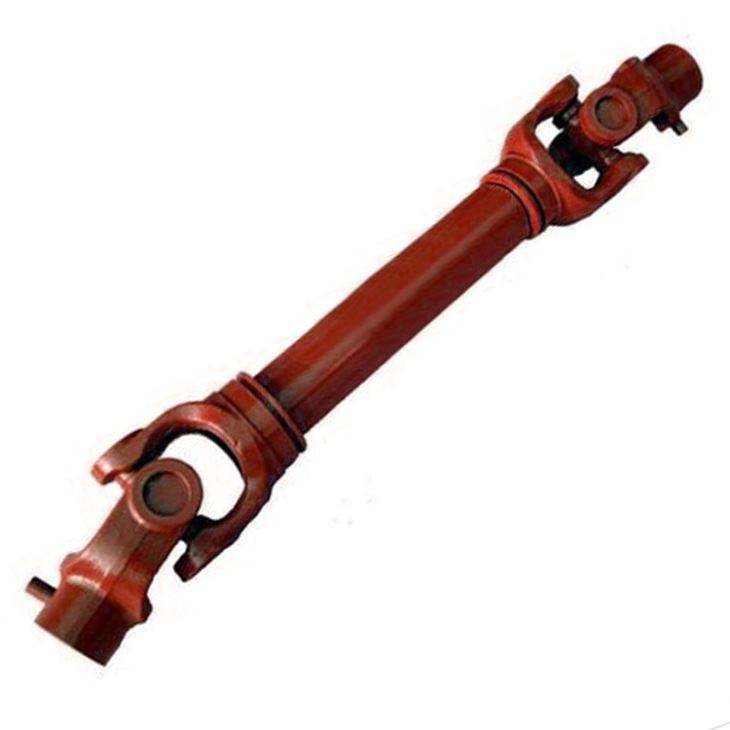
| Angular | Shaft centerlines intersect at an angle. | Elastomeric spider, Oldham, universal joint. |
| Parallel (Offset) | Shafts are parallel but not collinear. | Bellows, grid, gear couplings. |
| Axial (End Float) | Shafts move closer or farther apart along the axis. | Beam, diaphragm, elastomeric sleeve couplings. |
| Combined | A mix of angular, parallel, and axial misalignment. | Multi-purpose disc or elastomeric couplings with high misalignment capacity. |
Imagine a coupling in a food processing plant, constantly exposed to caustic washdowns, or one in a foundry battling extreme heat and abrasive dust. Standard components fail quickly. The operating environment dictates material selection, sealing requirements, and lubrication needs. Similarly, compact machinery leaves little room for bulky components. Here, the question of "What are the key factors in coupling sizing and selection?" expands to include chemical resistance, temperature limits, IP ratings, and physical dimensions. Raydafon Technology Group Co.,Limited addresses these challenges by offering couplings in stainless steel, high-temperature alloys, and with sealed-for-life designs, ensuring performance and longevity even in the toughest conditions.
| Environmental Factor | Impact on Coupling | Selection Considerations |
|---|---|---|
| Temperature Extremes | Affects material strength, elastomer hardening/cracking, lubrication. | Material grade (e.g., high-temp alloys), high-temp grease, non-lubricated designs. |
| Corrosive/Chemical Exposure | Causes rust, pitting, and material degradation. | Stainless steel (304, 316), coated surfaces, or engineered polymers. |
| Contaminants (Dust, Moisture) | Abrasion, clogging, reduced service life. | Sealed designs (IP ratings), non-exposed moving parts. |
| Space Limitations (Bore Size, Length) | Physical fit and installation access. | Compact designs (disc, bellows), maximum bore capacity, minimum assembly length. |
Q: What is the single most important calculation when sizing a coupling?
A: While all factors are interconnected, determining the correct Selection Torque (Ts) is arguably the most critical first step. This requires accurately calculating your application's torque and then applying the appropriate Service Factor (SF). An undersized coupling will fail under load, while an oversized one is wasteful and can affect system dynamics. Using the expertise and application guides from Raydafon Technology Group Co.,Limited helps eliminate this calculation risk.
Q: How do I choose between a flexible and a rigid coupling?
A: The choice hinges on misalignment. If shafts can be aligned nearly perfectly and stay that way (a rare case), a rigid coupling is simple and efficient. However, for 99% of industrial applications, some misalignment is present or will develop. A flexible coupling is essential to accommodate this, protecting bearings, seals, and the shafts themselves. The type of flexibility (metallic, elastomeric) depends on the specific misalignment and torque profile, a decision where Raydafon's technical support is highly beneficial.
Mastering coupling selection is fundamental to operational success. We hope this guide has clarified the key factors and empowered you to make more informed decisions. Do you have a specific application challenge? What environmental factors are toughest in your industry? Share your thoughts or questions in the comments below.
For expert guidance and a comprehensive range of high-performance coupling solutions designed to meet these critical factors, consider Raydafon Technology Group Co.,Limited. With a commitment to precision engineering and reliability, Raydafon provides the technical support and product quality needed to solve complex drivetrain challenges. For inquiries, please contact [email protected].
J. Smith, M. Chen, 2021, "Dynamic Torque Analysis and Service Factor Determination for Flexible Couplings in Industrial Drives", Journal of Mechanical Design, Vol. 143, No. 5.
K. Patel, L. Rodriguez, 2019, "The Influence of Angular Misalignment on the Fatigue Life of Metallic Disc Couplings", International Journal of Fatigue, Vol. 125.
R. Davis, 2020, "Material Selection for Couplings in Corrosive Processing Environments", Corrosion Engineering, Science and Technology, Vol. 55, No. 3.
A. Wilson, B. Jackson, 2018, "A Comparative Study of Elastomeric vs. Metallic Couplings for Vibration Damping in Pump Systems", Journal of Sound and Vibration, Vol. 433.
T. Fischer, 2022, "Optimization of Coupling Sizing Algorithms for High-Inertia Load Applications", Mechanism and Machine Theory, Vol. 167.
S. Kim, H. Tanaka, 2017, "Thermal Effects on Misalignment Capacity in High-Temperature Turbomachinery Couplings", ASME Journal of Engineering for Gas Turbines and Power, Vol. 139, No. 8.
P. O'Brien, 2019, "Failure Mode Analysis of Industrial Couplings: A Root Cause Investigation", Engineering Failure Analysis, Vol. 106.
G. Miller, F. Zhang, 2021, "Finite Element Analysis of Stress Concentration in Keyless Shaft-Hub Connections of Couplings", Finite Elements in Analysis and Design, Vol. 192.
L. Brown, 2018, "The Role of Couplings in Torsional Vibration Systems: Isolation and Control", Journal of Vibration and Acoustics, Vol. 140, No. 4.
M. Garcia, et al., 2020, "Standardization of Service Factor Tables for Coupling Selection Across Industry Sectors", Proceedings of the Institution of Mechanical Engineers, Part C: Journal of Mechanical Engineering Science, Vol. 234, No. 14.