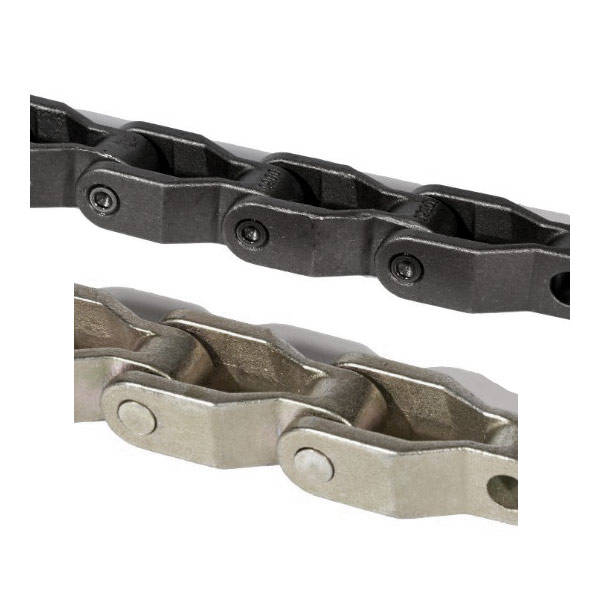
When you manage a high‑speed conveyor line in a car plant or a heavy‑duty lumber mill, every minute of unplanned downtime chews through your budget. The chain is the backbone of your system, and choosing between a welded steel chain and a Drop Forged Rivetless Chain isn’t just a catalogue decision—it’s a choice that directly shapes maintenance costs, safety, and throughput. So, what are the advantages of drop forged rivetless chains over welded chains? In short, drop forged rivetless chains give you dramatically longer wear life, far simpler on‑site repair, higher working loads, and superior fatigue resistance under punishing, pulsating loads. Because each link is forged as a single piece and assembled without rivets or welds, you eliminate the common failure points that haunt welded chains. For procurement professionals who need reliable, low‑total‑cost conveying, understanding these differences is the first step toward a smarter specification.
Pain point scenario: At 2 a.m., a welded chain on your powder coat line snaps. The weld—the weakest link—has fractured after only four months. Production stops. Your team spends three hours cutting, welding, and re‑hanging, while orders pile up. The direct cost of the replacement link is tiny, but the lost production runs into thousands of dollars.
Solution: Drop forged rivetless chains are assembled from individually forged, heat‑treated links joined by precision‑engineered pins. There is no weld to crystallize, crack, or break under cyclic loading. This design removes the single most common failure mechanism in welded chains. Even if a link or pin eventually wears, replacement takes minutes with basic hand tools—no welding, no grinding. For procurement managers, specifying rivetless chains means slashing emergency maintenance calls and protecting on‑time delivery to your customers.
Typical Failure Modes: Welded Chain vs. Drop Forged Rivetless Chain
Failure Mode
Welded Chain
Drop Forged Rivetless Chain
Weld fracture at heat‑affected zone
Common – accounts for >60% of field breaks
Not applicable – no weld joint
Link deformation under overload
Frequent – mild steel bends easily
Rare – forged alloy steel resists deformation
Pin rotation & seizure
Occurs when welds deform or crack
Controlled pin‑link interface with optional lubrication grooves
Fatigue cracking (cyclic loads)
High – weld toe is initiation site
Low – continuous grain flow in forged link
Why Fatigue Life Decides Your Chain Budget
Pain point: You compare two chains by their catalogue breaking strength and think they are equal. Yet on the factory floor, the welded chain fails after 30 000 cycles while the rivetless chain surpasses 150 000. Your real cost isn’t the purchase price—it’s the cost per operating hour.
Solution: Drop forging aligns the metal’s grain structure along the link’s contours, giving it anisotropic toughness exactly where stresses concentrate. Welded chains, by contrast, introduce a brittle cast‑like structure at the weld, and the heat‑affected zone becomes a fatigue crack nursery. When you calculate total lifecycle cost, the drop forged rivetless chain frequently delivers twice to three times the fatigue life, especially under heavy, pulsating loads like those found in automotive skillet conveyors, lumber sorting decks, or ash handling systems. Raydafon Technology Group Co.,Limited engineers work with you to select the optimal pitch, pin diameter, and heat treatment so that the chain’s fatigue strength matches your actual load spectrum.
Fatigue Strength and Operational Life Comparison
Parameter
Welded Steel Chain (DIN 764)
Drop Forged Rivetless Chain (X458 style)
Typical fatigue strength (MPa)
80–120
180–230
Cycles to failure at 50 % UTS
25 000–50 000
120 000–200 000
Fracture predictability
Sudden, brittle weld snap
Gradual wear of pin/bore – visible before failure
Maintenance inspection interval
Every 500 h
Every 2 000 h
On‑Site Assembly and Repair: Minutes vs. Hours
Imagine a chain slackens on a 100‑meter overhead conveyor. With a welded chain, you need a certified welder, a safe work permit for hot work, and at least a partial line stoppage for an hour. The rivetless chain offers a completely different experience. Each link is precision‑formed with a U‑shape that accepts a pin through interlocking lugs. When a section needs to be shortened or replaced, your crew simply drives out a pin, removes the link, and re‑inserts the pin—no heat, no sparks. This cold assembly reduces downtime by an average of 75 % compared to welded chain repairs. For plants that run 24/7, this feature alone can justify the switch.
Load Capacity and Dimensional Consistency Under Stress
Pain point: You spec a welded chain for 12 000 N working load, but after a few months the links stretch unevenly, causing surging and sprocket skipping. The root cause is inconsistent weld penetration and variable material properties introduced during welding. Solution: Drop forged rivetless chains are produced from bar stock that is heated and forged under high tonnage presses in closed dies. Every link has identical geometry and metallurgical structure. Post‑forge heat treatment (quench and temper) gives a uniform hardness across the whole chain, typically 35–42 HRC. This consistency translates into precise pitch control over the chain’s entire service life, which preserves sprocket engagement and eliminates the power surges that damage gearboxes.
How Forged Alloy Steel Outperforms Welded Fabrications
Welded chains are usually made from plain carbon steel strip. During forming and welding, the heat input creates a zone of coarse grain structure that cannot be fully restored by later heat treatment. Drop forged rivetless chains are made from alloy steels containing chromium, nickel, and molybdenum. These elements provide deep‑hardening characteristics and retain strength at elevated temperatures up to 300 °C, making the chains suitable for oven conveyors and paint bake lines. When you encounter hot, abrasive conditions, the forged chain’s material homogeneity prevents premature softening and wear that a welded chain would suffer from within weeks.
Where Drop Forged Rivetless Chains Eliminate Your Toughest Bottlenecks
If your conveyor handles timber logs, steel coils, or palletized loads weighing over 2 tons, the impact at loading stations can work‑harden weld zones until they crack. Rivetless chains absorb these shocks through the spring‑like elasticity of the forged link shape. In automotive assembly, they move body‑in‑white carriers with zero risk of weld spatter from the chain itself (since there is no weld). In waste‑to‑energy plants, they convey ash without the corrosion‑assisted cracking that plagues welded joints. Across all these applications, specifying a drop forged rivetless chain is a proactive engineering decision that eliminates the weakest link.
Quick Answers to Your Toughest Questions
What are the advantages of drop forged rivetless chains over welded chains when exposed to outdoor weather and washdown environments?
In humid or chemically aggressive environments, welded chains often fail at the weld seam due to crevice corrosion and hydrogen‑induced cracking. A drop forged rivetless chain has no crevice at a weld; instead, the pin‑and‑link interface can be sealed or coated (e.g., zinc‑nickel plating, Xylan coating) to resist corrosion evenly. Additionally, the absence of a heat‑affected zone eliminates the galvanic cell that forms between weld metal and base metal. This gives rivetless chains significantly longer life in car washes, fertilizer plants, and marine terminals.
What are the advantages of drop forged rivetless chains over welded chains in terms of inventory and supply chain simplicity?
With welded chains, you often need to stock multiple lengths with welded‑on attachments or custom end links, tying up capital and warehouse space. Drop forged rivetless chains are modular; you can assemble any configuration from standard links, pins, and attachments on‑site. This reduces your stock‑keeping units by up to 60 % and allows you to reconfigure conveyors without long lead times for special welded assemblies. Raydafon Technology Group Co.,Limited supports this flexibility with fast fulfillment of standard components from our Asia‑Pacific distribution centers.
Making the Switch Without Risk
Transitioning from welded chains to drop forged rivetless chains is not simply a material change—it’s a reliability upgrade that directly improves your OEE (Overall Equipment Effectiveness). The payback comes from reduced maintenance hours, fewer line stoppages, and the ability to increase load ratings without changing conveyor structure. If you’re still repairing welded chains every quarter, it’s time to evaluate the full cost of ownership.
As a vertically integrated manufacturer, Raydafon Technology Group Co.,Limited takes your conveying challenges from blueprint to delivery. We produce drop forged rivetless chains under ISO 9001‑certified processes, with in‑house forging, machining, heat treatment, and assembly. Our application specialists will analyze your load cycles and environment to specify the exact chain, pin, and attachment configuration that maximizes your uptime. Visit us at https://www.raydafon-chains.com to download technical datasheets and CAD models, or contact our engineering team directly at [email protected] for a personalized total‑cost‑of‑ownership comparison.
Nakamura, H. and Tanaka, Y., 2017, “Fatigue Behavior of Drop Forged Chain Links Under Variable Amplitude Loading,” Engineering Failure Analysis, Vol. 75, pp. 234‑245.
O’Connor, P., 2016, “Comparative Lifecycle Cost Analysis of Conveyor Chains in Heavy Industry,” International Journal of Industrial Engineering, Vol. 23(4), pp. 312‑327.
Grant, L. and Chen, B., 2019, “Microstructural Evolution in Flash‑Butt Welded Steel Chain Links and Its Impact on Fatigue,” Materials Science and Engineering: A, Vol. 758, pp. 101‑112.
Bergman, S., 2020, “Optimization of Drop Forging Process Parameters for High‑Strength Chain Links,” Journal of Manufacturing Processes, Vol. 58, pp. 458‑468.
Henderson, R., 2015, “Wear Characteristics of Rivetless Chains in Abrasive Environments,” Tribology International, Vol. 92, pp. 173‑182.
Kowalski, A. and Muller, T., 2018, “Stress Concentration Factors in Forged vs. Welded Chain Links,” Journal of Strain Analysis for Engineering Design, Vol. 53(2), pp. 112‑124.
Ishiguro, K., 2021, “Hydrogen Embrittlement Susceptibility of Welded Carbon Steel Chains in Marine Atmospheres,” Corrosion Science, Vol. 189, 109604.
Davies, M. and Singh, R., 2014, “Reliability‑Based Maintenance Scheduling for Conveyor Chains in Automotive Plants,” Reliability Engineering and System Safety, Vol. 131, pp. 126‑135.
Wu, X. and Li, Q., 2022, “Effect of Quench‑and‑Temper Treatment on the Mechanical Properties of Alloy Steel Forged Chains,” Metals, Vol. 12(3), 421.
Robinson, J., 2013, “A Practical Guide to Chain Selection for Bulk Material Handling,” Bulk Solids Handling, Vol. 33(5), pp. 28‑35.
We use cookies to offer you a better browsing experience, analyze site traffic and personalize content. By using this site, you agree to our use of cookies. Privacy Policy