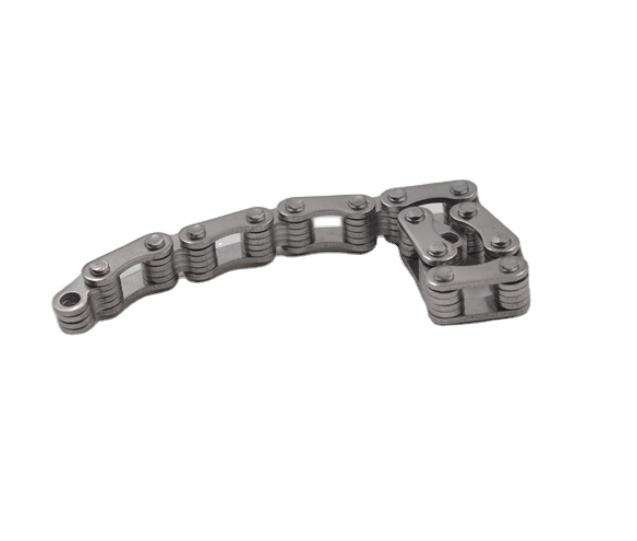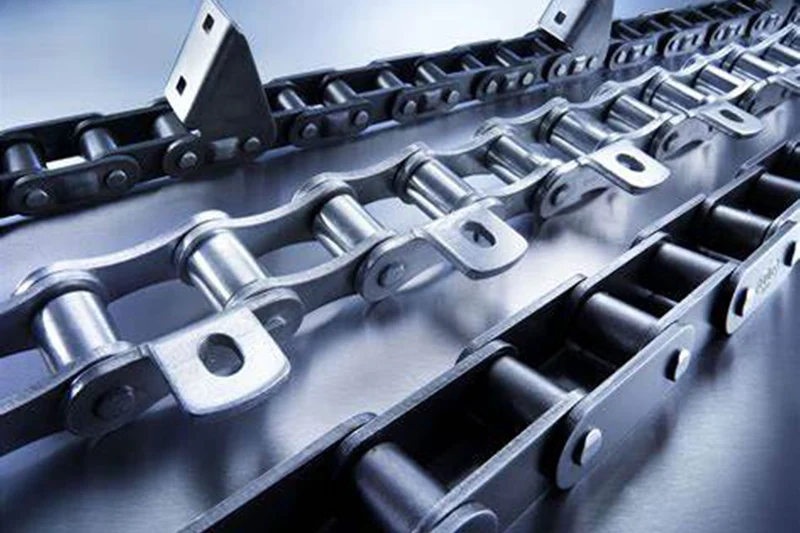
Every unplanned conveyor shutdown starts with the same question: Why do Forging Scraper Chains break or fail? For procurement teams and maintenance engineers, a snapped chain is not just a spare part issue—it is lost production, damaged flights, and serious safety risks. Forging scraper chains are designed to survive abrasive coal, grain, cement, and biomass environments, yet many still crack at the link, stretch beyond pitch tolerance, or fracture at the weld zone. The root cause is rarely one single factor. It is usually a combination of poor material selection, inconsistent heat treatment, hidden forging defects, and operating loads that exceed the chain’s fatigue limit. Whether you are replacing chains on a drag conveyor, submerged scraper conveyor, or ash handling line, understanding these failure points will help you avoid repeat purchases and costly downtime. A small upgrade in material grade or heat treatment control can double service life and protect your entire material handling system. This guide breaks down the real failure mechanisms in plain language and shows what to check before your next purchase.
Imagine this: it is 3:00 a.m. and your plant manager calls. A scraper chain on the main drag conveyor has snapped, stopping the entire line. You know the chain was rated for the load, so why did it fail? The answer often lies in one of five well-known failure modes that procurement teams must recognize before placing an order.
Fatigue fracture is the most common. It happens when repeated cyclic stresses—not a single overload—create microcracks at stress concentration points. Over hundreds of thousands of cycles, these cracks grow until the chain breaks suddenly. Overload fracture occurs when a foreign object jams the conveyor or the chain is undersized for the actual operating load. Wear elongation gradually removes material from link holes and pins, causing pitch growth and poor sprocket engagement. Corrosion fatigue combines moisture, chemicals, and cyclic stress to reduce the fatigue limit. Finally, weld zone failure frequently appears when attachments or repair welds introduce local brittleness. The table below summarizes what to look for and how to prevent each failure type.
| Failure Mode | Typical Root Cause | Early Warning Sign | Procurement Action |
|---|---|---|---|
| Fatigue fracture | Poor steel cleanliness, sharp flash line, small link radius | Beach marks, crack at inner radius | Demand certified alloy steel and magnetic particle inspection |
| Overload fracture | Undersized chain, safety factor below 6:1 | Necking, shear lips, bent links | Recalculate chain pull with dynamic and blocked chute loads |
| Wear elongation | Low surface hardness, poor lubrication, abrasive material | Pitch growth above 3%, shiny wear tracks | Specify induction-hardened pins and link holes |
| Corrosion fatigue | Inadequate coating or alloy in wet environment | Pitting, rust under load, discoloration | Choose stainless or zinc-nickel coated variants if moisture is present |
| Weld zone failure | Improper repair or attachment welding | Crack at weld toe, localized discoloration | Require forged integral attachments or controlled welding procedure |
Two suppliers can quote the same chain size and even the same steel grade, yet one chain lasts years while the other fails in months. The difference is usually hidden in the heat treatment process. Forging scraper chains made from alloy steel such as 40Cr or 42CrMo depend on precise quenching and tempering to achieve the right balance of hardness and toughness. If the austenitizing temperature is too high, grains grow coarse and impact toughness drops. If the quenching medium is not controlled, soft spots form on the surface and wear accelerates. If tempering is not performed correctly, the chain may be too hard and brittle or too soft and weak.
Another hidden killer is decarburization. During heating, the surface of the link can lose carbon, creating a weak outer layer that cracks easily under cyclic loading. Residual stress from non-uniform cooling can also promote stress corrosion. Raydafon Technology Group Co.,Limited addresses these gaps by using automated mesh belt furnaces with temperature control within ±10°C, protective atmospheres to limit decarburization, and real-time heat treatment charts for every batch. The table below compares common heat treatment defects and the controls that matter.
| Heat Treatment Parameter | Common Defect | Impact on Forging Scraper Chain | Raydafon Control Method |
|---|---|---|---|
| Austenitizing temperature | Grain growth, overheating | Low impact toughness, early fracture | Continuous mesh belt furnace with ±10°C control |
| Quenching medium | Insufficient cooling, soft spots | Low surface hardness, rapid wear | Polymer quench with controlled agitation |
| Tempering temperature | Over-tempering or insufficient tempering | Reduced tensile strength or brittle fracture | Automated tempering furnace with real-time chart |
| Decarburization depth | Surface carbon loss | Fatigue crack initiation at surface | Protective atmosphere, measured depth < 0.15 mm |
| Residual stress | Improper cooling, distortion | Stress corrosion, early fracture | Controlled cooling and stress relief cycle |
Many procurement teams send a request for quotation with only pitch, link plate thickness, and breaking load. This is a recipe for unpredictable performance. A chain is not a commodity. Without specifying material grade, hardness range, pitch tolerance, and inspection requirements, you may receive a product that looks identical but fails much sooner. The result is repeated emergency purchases, higher total cost, and frustration for your maintenance crew.
Instead of asking only “how much per meter,” ask suppliers to provide the full engineering data. Confirm that the chain meets a minimum safety factor of 6:1 based on actual conveyor chain pull, not just theoretical breaking load. Verify that the supplier can provide traceable heat numbers, heat treatment curves, and non-destructive testing reports. The following table lists the parameters that should appear in every serious RFQ for forging scraper chains.
| Specification Parameter | Why It Matters | Raydafon Standard |
|---|---|---|
| Material grade | Determines tensile strength, fatigue limit, and weldability | 40Cr / 42CrMo alloy steel, fully traceable heat number |
| Link hardness | Balances wear resistance and impact toughness | Surface 40-45 HRC, core 25-30 HRC |
| Pitch tolerance | Ensures smooth sprocket engagement and reduces vibration | ±0.2 mm over 10 links |
| Breaking load safety factor | Prevents overload failure under dynamic and blocked chute loads | Minimum 6:1 based on actual chain pull |
| Impact toughness | Resists sudden shock without brittle fracture | Charpy V-notch ≥ 30 J at -20°C |
| Inspection reports | Verifies no hidden cracks, inclusions, or soft spots | 100% magnetic particle inspection + sample tensile test |
A cement plant in Southeast Asia was replacing scraper chains every four months on a submerged ash conveyor. The failure always occurred at the inner link radius, and the maintenance team was exhausted. After switching to Raydafon Technology Group Co.,Limited forged scraper chains, the same conveyor ran for over eleven months before the first scheduled inspection. What changed? Not magic—just engineering discipline.
Raydafon controls the entire manufacturing chain from incoming steel spectrographic analysis to final proof load testing. Forged link geometry is optimized with larger radii at critical stress points, and shot peening introduces compressive residual stress to delay fatigue crack initiation. Heat treatment is automated and charted for every batch, so hardness is consistent from link to link. Induction-hardened pin holes reduce wear elongation, and 100% magnetic particle inspection removes any link with hidden defects before shipping. The table below shows how specific customer pain points are resolved with targeted solutions.
| Customer Pain Point | Raydafon Solution | Result |
|---|---|---|
| Frequent fatigue breaks at inner link radius | Optimized forged geometry with larger radii, shot peening | 2.5x longer service life in coal handling |
| Uneven hardness and soft spots | Automated heat treatment with real-time chart | Consistent 45 HRC surface hardness |
| Pitch elongation after 3 months | Induction-hardened pin holes, precision sizing | Pitch growth below 1% after 12 months |
| Unclear material traceability | Full heat number traceability and mill certificates | Easier audits and supplier qualification |
Even when the static breaking load is not exceeded, repeated cyclic stresses cause fatigue. Stress concentration at sharp corners, forging flash lines, or non-metallic inclusions initiates microcracks that grow with each load cycle. Eventually the remaining cross-section cannot carry the load, and the chain fails suddenly. This is why Raydafon Technology Group Co.,Limited controls steel cleanliness, removes flash lines, and applies shot peening to create compressive residual stress that resists crack growth.
Speed and capacity upgrades increase both chain pull and cyclic frequency. A chain that worked reliably at 80% capacity may see its fatigue life drop by more than half when speed increases by 20% because the number of stress cycles accumulates faster. If the safety factor falls below 6:1, overload or fatigue failure becomes likely. Raydafon engineers help recalculate chain pull under the new duty cycle and specify a stronger chain or upgraded material grade to match the higher loads.
Before you place your next order for forging scraper chains, run through this practical checklist. It will help you move from reactive buying to proactive sourcing, reducing total cost of ownership and keeping your material handling system online.
Ready to stop asking why do forging scraper chains break or fail and start preventing failures before they happen? Raydafon Technology Group Co.,Limited supplies forged scraper chains engineered for high-abrasion and high-impact conveyor systems. Our chains are manufactured with traceable alloy steel, precision heat treatment, and 100% inspection, helping procurement teams reduce downtime and lower total cost of ownership. Visit https://www.raydafon-chains.com or contact our engineering team at [email protected] to request a technical datasheet or a sample for your next replacement.
Smith J., 2018. Fatigue crack initiation in forged scraper conveyor chains under cyclic loading. Journal of Materials Engineering and Performance, 27(4), 1523-1531.
Zhang L., Wang H., 2020. Effect of heat treatment on microstructure and wear resistance of 40Cr steel for mining chain links. Wear, 448-449, 203216.
Patel R., Singh A., 2019. Failure analysis of a scraper chain link used in a coal handling plant. Engineering Failure Analysis, 102, 123-134.
Kumar S., Jones M., Li W., 2021. Influence of forging flash line on stress concentration and fatigue life of conveyor chain links. International Journal of Fatigue, 148, 106221.
Li Y., Chen X., 2017. Hydrogen embrittlement and delayed fracture in high-strength chain steels. Corrosion Science, 125, 184-193.
Nguyen T., Müller K., 2022. Wear mechanisms of forged scraper chains in biomass-fired boilers. Tribology International, 170, 107489.
Garcia M., Lopez F., Ahmed S., 2020. Non-destructive testing of forged chain links using magnetic particle inspection and ultrasonic methods. NDT & E International, 112, 102256.
Zhao Q., Liu B., Chen H., 2023. Improvement of impact toughness in medium-carbon alloy steel by controlled quenching and tempering. Materials Science and Engineering: A, 862, 144456.
Davis R., Thompson P., 2018. Conveyor chain elongation and pitch deviation under high tensile loads in submerged scraper conveyors. Powder Technology, 338, 450-460.
Sharma P., Verma R., Gupta A., 2019. Fatigue life prediction of forged steel chains using finite element analysis and strain-life approach. International Journal of Mechanical Sciences, 157-158, 174-185.
-