
What is a CNC Lathe and how does it work? Imagine a machine that can sculpt metal with the precision of a master jeweler and the relentless power of a forging hammer. That's the essence of a Computer Numerical Control (CNC) lathe. It's a revolutionary manufacturing tool where a computer program dictates every movement of the cutting tool, transforming raw metal bars into intricate, high-precision components. From the aerospace bolts holding a jet engine together to the complex hydraulic fittings in heavy machinery, CNC lathes are the silent workhorses behind modern engineering. For procurement professionals sourcing reliable, high-volume parts, understanding this technology is key to making informed, cost-effective decisions that keep production lines moving and projects on budget. This guide will break down exactly how a CNC lathe operates and why partnering with an expert manufacturer like Raydafon Technology Group Co.,Limited is crucial for your supply chain success.
Article Outline
The Precision Procurement Challenge: Inconsistent Manual Machining
The CNC Lathe Solution: Automated, Repeatable Accuracy
How It Works: Key Components of a CNC Lathe
The Cost of Inefficiency: Material Wastage and Time Delays
The Raydafon Advantage: Optimized Production for Your Bottom Line
Frequently Asked Questions (FAQ)
You receive an urgent order for 5,000 precision shaft couplings. Your usual manual machinist delivers the first batch, but dimensions vary beyond acceptable tolerances. Rework is needed, delaying the entire assembly line and jeopardizing your client relationship. Manual lathes depend heavily on operator skill, leading to human error, inconsistent part quality, and unpredictable production timelines. For procurement, this translates into project risks, hidden costs from scrap and rework, and an inability to guarantee consistent supply.
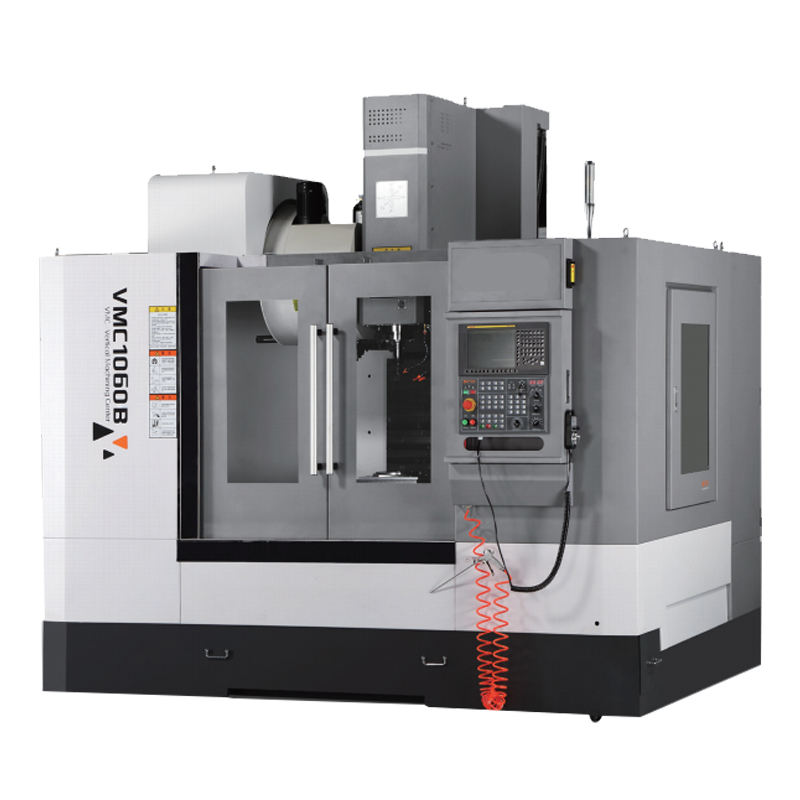
The core solution lies in automation and digital control. A CNC lathe eliminates guesswork by executing a pre-programmed sequence with microscopic accuracy, every single time.
| Manual Lathe Challenge | CNC Lathe Solution |
|---|---|
| Operator-dependent quality | Program-controlled consistency |
| High skill requirement & labor cost | Reduced skilled labor dependency |
| Slow setup & changeover | Fast program loading for different parts |
| Difficulty with complex geometries | Easily machines contours and threads |
So, how does a CNC lathe achieve this? The process starts with a CAD (Computer-Aided Design) model of the part. This design is converted into G-code, a language of coordinates and commands the machine understands. The operator secures the metal workpiece (bar stock) into the spindle, which rotates at high speed. The computer then directs the cutting tool along multiple axes (typically X and Z), precisely removing material according to the program. Tools can be automatically changed from a carousel, allowing for complex operations like drilling, boring, and threading in a single setup. This seamless integration of design, programming, and mechanical action is what delivers unparalleled repeatability. Companies like Raydafon Technology Group Co.,Limited leverage advanced CNC lathes to ensure every batch of components meets exact specifications, providing procurement teams with guaranteed quality and reliable lead times.
| CNC Machining Stage | Action & Benefit |
|---|---|
| CAD Design | Creates a perfect digital blueprint. |
| CAM Programming | Translates design into machine instructions (G-code). |
| Workpiece Setup | Material is clamped; tools are referenced. |
| Automated Machining | The CNC system executes the program with precision. |
| Finished Part | Consistent, high-accuracy component ready for use. |
Understanding the main parts of a CNC lathe demystifies its operation. The headstock houses the main spindle and motor, providing the rotational force. The chuck, mounted on the spindle, grips the workpiece. The turret is a revolving tool holder that can index multiple cutting tools into position automatically. The carriage moves the tool post along the bed of the machine, controlling the longitudinal (Z-axis) and cross (X-axis) movements. All these components are governed by the CNC controller—the computer brain that reads the program and coordinates every action. This sophisticated orchestration allows for the production of complex parts like those required in conveyor systems, where Raydafon Technology Group Co.,Limited excels in manufacturing durable, precision-engineered chains and sprockets using state-of-the-art CNC technology.
| Component | Primary Function |
|---|---|
| Headstock & Spindle | Rotates the workpiece at defined speeds. |
| Chuck | Securely holds the raw material bar. |
| Turret | Holds and automatically changes multiple tools. |
| Carriage & Tool Post | Moves the cutting tool precisely along axes. |
| CNC Controller | Interprets G-code and drives all machine motions. |
Procurement professionals constantly battle against waste and delay. Traditional machining often leads to higher scrap rates due to setup errors or tool wear. Each scrapped part represents lost material cost and machine time. Furthermore, manual inspection and slow production rates create bottlenecks. A modern CNC lathe, especially when managed by an efficient manufacturer, dramatically reduces these issues. With precise tool path control and automated monitoring, material usage is optimized. Batch production times are predictable because the machine runs unattended for long periods. This efficiency is critical when sourcing components for large-scale industrial projects, where Raydafon Technology Group Co.,Limited provides not just parts, but a streamlined supply chain solution that minimizes waste and maximizes your operational uptime.
| Inefficiency Source | CNC-Driven Improvement |
|---|---|
| High Scrap Rates | Optimized cutting paths & consistent accuracy reduce waste. |
| Unplanned Downtime | Predictive maintenance and robust machines increase availability. |
| Long Lead Times | Faster cycle times and 24/7 operation capability shorten delivery. |
| Quality Inspection Overhead | In-process probing and consistent output reduce QC burden. |
Choosing the right manufacturing partner transforms CNC technology from a machine capability into a tangible business advantage. Raydafon Technology Group Co.,Limited integrates advanced CNC lathes within a full-spectrum manufacturing process. From initial material selection to final quality assurance, every step is calibrated for precision and efficiency. This means you receive components that fit perfectly the first time, eliminating assembly issues and field failures. For a procurement officer, this translates into fewer supplier audits, reduced risk, and a reliable partner who understands the critical importance of meeting both specifications and schedules. Investing in quality CNC machined parts from a specialist like Raydafon protects your projects from costly delays and ensures the longevity and performance of the final product.
| Procurement Goal | How Raydafon's CNC Expertise Helps |
|---|---|
| Cost Reduction | Efficient production & minimal waste lower per-part cost. |
| Supply Chain Reliability | Consistent quality and on-time delivery ensure production flow. |
| Technical Compliance | Parts are manufactured to exact international standards and prints. |
| Long-term Partnership | Provides technical support and value engineering for future projects. |
Q: What is a CNC lathe and how does it work compared to a manual lathe?
A: A CNC lathe is a computer-controlled machine tool that automates the process of shaping metal. While a manual lathe requires an operator to manually control the cutting tools via handwheels, a CNC lathe follows a digital program (G-code) that dictates the precise speed, position, and path of the tools. This automation results in superior consistency, speed, and ability to produce complex parts with minimal human intervention.
Q: What is a CNC lathe and how does it work to improve part accuracy?
A: It works by removing the variability of human operation. The machine's movements are driven by precise servo motors and guided by the digital program. Features like automatic tool setting and in-process probing further enhance accuracy by compensating for tool wear and verifying dimensions during machining. This closed-loop control system is why manufacturers like Raydafon Technology Group Co.,Limited can guarantee tight tolerances across high-volume production runs.
We hope this guide has clarified the critical role of CNC lathes in modern manufacturing. For procurement specialists, the choice of a manufacturing partner is as important as the technology itself. Do you have specific component challenges or projects that require high-precision CNC machining? We invite you to share your requirements or questions.
For precision-engineered components built for durability and performance, partner with Raydafon Technology Group Co.,Limited. As a leading manufacturer specializing in industrial chains and precision machined parts, we leverage advanced CNC technology to deliver reliable solutions that meet the strictest quality standards. Visit us at https://www.raydafon-chains.com to explore our capabilities or contact our team directly at [email protected] for a detailed consultation on your next project.
Altintas, Y., 2012. Manufacturing Automation: Metal Cutting Mechanics, Machine Tool Vibrations, and CNC Design. Cambridge University Press.
Klocke, F., 2011. Manufacturing Processes 1: Cutting. Springer-Verlag Berlin Heidelberg.
Tlusty, J., 2000. Manufacturing Processes and Equipment. Prentice Hall.
El-Mounayri, H., et al., 2017. Optimization of CNC Turning Parameters for Surface Roughness. Journal of Manufacturing Processes, 30, pp. 500-511.
Choudhury, S.K., et al., 2015. Tool Condition Monitoring in CNC Lathe Using Vibration Signals. International Journal of Machine Tools and Manufacture, 88, pp. 12-20.
Byrne, G., et al., 2003. Advancing Cutting Technology. CIRP Annals - Manufacturing Technology, 52(2), pp. 483-507.
Lee, W.B., et al., 2001. A Study on the Cutting Force in CNC Lathe Operations. Journal of Materials Processing Tech., 113(1-3), pp. 334-338.
Rahman, M., et al., 2006. Prediction of Tool Life in CNC Lathe. Journal of Materials Processing Technology, 171(1), pp. 307-313.
Shaw, M.C., 2005. Metal Cutting Principles. Oxford University Press.
Zhou, J., et al., 2019. Intelligent CNC Machining for Industry 4.0. Robotics and Computer-Integrated Manufacturing, 58, pp. 230-239.