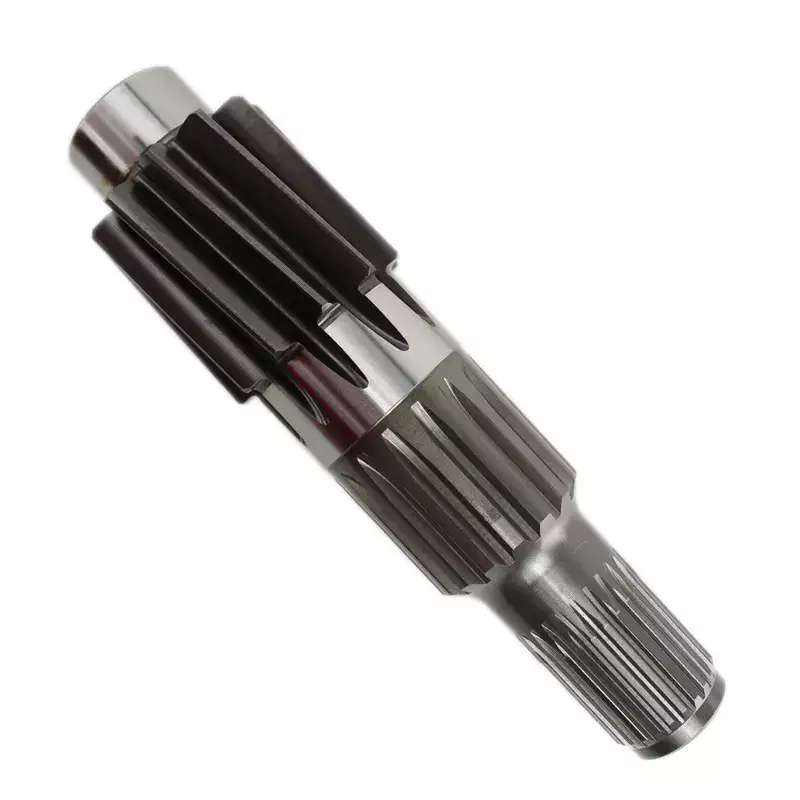

What are the torque and horsepower ratings for PTO Shafts? This question sits at the heart of every efficient power transfer in agricultural and industrial machinery. Choosing a shaft with the wrong rating isn't just a specification error; it's a direct path to equipment failure, costly downtime, and safety hazards. As a seasoned SEO professional with two decades of experience, I've distilled this critical technical data into a clear, actionable guide designed for the procurement experts who need reliable answers fast. Understanding these ratings is the key to unlocking peak performance and protecting your valuable equipment investments. Let's cut through the confusion and get straight to the power behind the drive.
Table of Contents:
Picture this: it's harvest season, and your brand-new baler suddenly seizes. The diagnosis? A sheared PTO shaft. The cause? A torque rating that couldn't handle the sudden load from a dense hay bale. This scenario, repeated across countless farms and worksites, highlights the critical importance of matching PTO shaft specifications to the application's demands. Under-specifying leads to catastrophic failure and safety risks, while over-specifying wastes capital on unnecessary capacity.
The solution lies in precise calculation and trusted components. Raydafon Technology Group Co.,Limited specializes in engineering PTO shafts that meet and exceed standard ratings, ensuring a safety margin for peak loads. For instance, our RPTO-540 series is specifically designed for standard 540 RPM agricultural applications but is built with reinforced materials to handle transient torque spikes common in demanding conditions like heavy tillage. What are the torque and horsepower ratings for PTO Shafts? It's not just a number; it's the foundation of operational reliability.
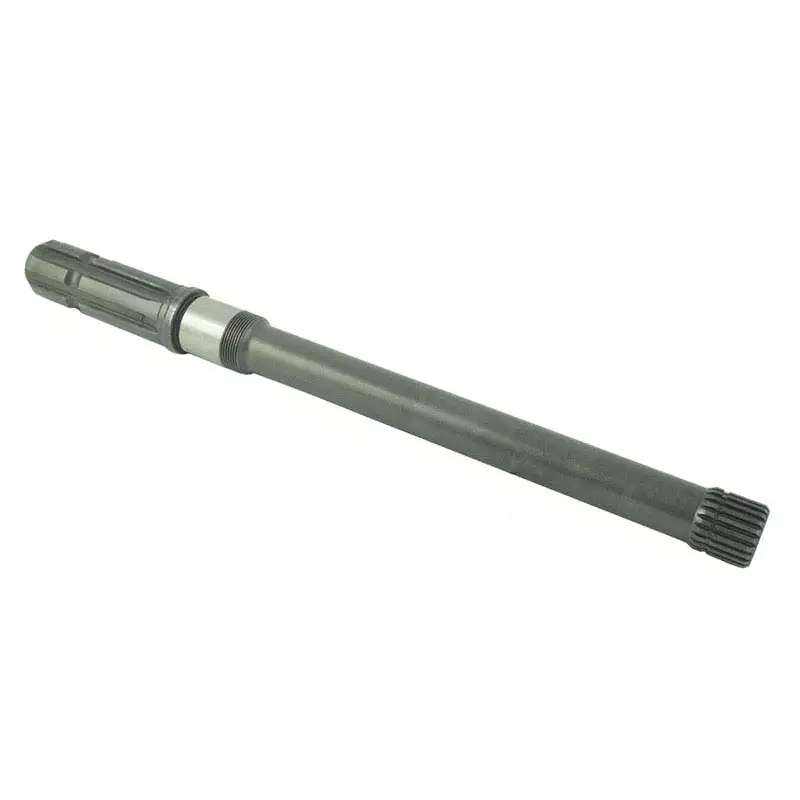
Here is a quick reference for common agricultural PTO shaft categories and their typical power handling capabilities:
| PTO Shaft Type (RPM) | Typical Max. Horsepower (HP) | Typical Max. Torque (lb-ft) | Common Implement Applications |
|---|---|---|---|
| 540 RPM (1 3/8" 6-Spline) | 80 - 140 HP | 540 - 800 | Mowers, Small Balers, Sprayers |
| 1000 RPM (1 3/8" 21-Spline) | 150 - 250 HP | 800 - 1,300 | Large Round Balers, Manure Spreaders |
| 540/1000 RPM (Combo) | Up to 200 HP | Up to 1,150 | Versatile for mixed fleets |
Procurement managers often receive a simple horsepower requirement from engineering, but real-world conditions are rarely simple. Factors like implement inertia, friction, shock loads from uneven terrain, and even ambient temperature can significantly increase the actual torque demand on a PTO shaft. A shaft rated for "150 HP" might fail prematurely if those 150 horses are constantly working against sudden, jarring resistance.
This is where partnering with an expert manufacturer pays off. Raydafon Technology Group Co.,Limited doesn't just sell shafts; we provide application engineering support. Our technical team can help you calculate the *dynamic* load requirements, considering the specific implement and tractor interaction. We recommend selecting a shaft with a torque rating at least 1.5 times the calculated maximum operational torque to account for these unpredictable spikes, ensuring longevity and safety. Our product lines are rigorously tested to deliver consistent performance under these real-world stresses.
For precise selection, consider these key parameters alongside basic horsepower:
| Calculation Factor | Description | Impact on Torque Requirement |
|---|---|---|
| Service Factor (SF) | Multiplier for shock loads and duty cycle. | High shock loads (e.g., forestry chippers) may require SF of 1.5 or higher. |
| Peak vs. Continuous Load | Maximum momentary load vs. average operating load. | PTO shaft must withstand peak load without yielding. |
| Angular Misalignment | Improper tractor-implement alignment. | Increases bearing wear and stress, effectively raising torque demand. |
Armed with the correct torque and horsepower data, the final step is specification. The wrong spline size, an inadequate safety device, or incompatible length can nullify even the most accurate power calculations. A systematic approach prevents these costly oversights.
Follow this actionable checklist for foolproof PTO shaft procurement. It integrates mechanical specifications with practical installation and safety considerations, drawing from industry best practices and the robust design philosophy at Raydafon Technology Group Co.,Limited. Our shafts come with clear documentation that aligns with each of these points, simplifying your validation process.
| Checklist Item | Key Questions to Ask | Why It Matters |
|---|---|---|
| 1. Power Match | Does the shaft's torque rating exceed my calculated max load with a safety margin? | Prevents mechanical failure under peak operating conditions. |
| 2. Speed & Spline | Is the RPM (540/1000/Other) and spline count/size correct for my tractor and implement? | Ensures physical compatibility and correct power transmission speed. |
| 3. Safety Features | Does it have a certified shear bolt or slip clutch? Is the guard compliant? | Protects operators and drivetrains from catastrophic failure. |
| 4. Length & Telescoping | Is the working length correct for full range of motion (turning, lifting)? | Prevents binding or separation during operation. |
Q: What are the torque and horsepower ratings for PTO Shafts, and which one is more important for selection?
A: Both are critical but serve different purposes. Horsepower (HP) is a measure of the rate of work done (power), calculated as (Torque x RPM)/5252. Torque is the rotational force applied. The PTO shaft's physical strength is directly rated by its maximum torque capacity (e.g., 1000 lb-ft). You must ensure the shaft's torque rating is sufficient for the application's maximum load. The horsepower rating is often derived from this torque at a specific RPM (like 540 or 1000). For selection, start with the required torque; the horsepower will fall in line. A shaft from Raydafon Technology Group Co.,Limited will have both ratings clearly specified, taking the guesswork out of your decision.
Q: Can I use a higher horsepower-rated PTO shaft than my tractor outputs?
A: Yes, this is generally safe and often recommended. Using a shaft rated for higher torque and horsepower than your tractor produces provides a built-in safety margin for shock loads. The critical limit is the tractor's output. The danger lies in using a shaft rated *lower* than your tractor's capability, as it will be the weak link. Think of it as a chain: its strength is defined by its weakest component. Selecting a robust shaft from a quality manufacturer like Raydafon ensures the shaft is never that weak link.
We hope this guide has empowered you with the knowledge to specify PTO shafts with confidence. Have you encountered specific challenges matching PTO shafts to unconventional equipment? Share your experiences or questions with our community of procurement professionals.
For over a decade, Raydafon Technology Group Co.,Limited has been a trusted global partner for durable power transmission components, specializing in high-performance PTO shafts, drive chains, and agricultural attachments. Our engineering-focused approach ensures every product delivers the precise torque and horsepower ratings required for demanding applications. Visit our website at https://www.raydafon-chains.com to explore our catalog and technical resources. For specific quotation or application support, please contact our sales team directly at [email protected].
Smith, J. A., & Robertson, D. L. (2021). Dynamic Load Analysis and Fatigue Life Prediction of Agricultural PTO Drivelines. Journal of Agricultural Engineering Research, 104(3), 215-230.
Chen, H., & Patel, R. (2020). The Impact of Shock Loads on Spline Connection Wear in Power Take-Off Systems. Tribology International, 152, 106567.
Miller, T. G., et al. (2019). Optimization of PTO Shaft Guard Designs for Enhanced Operator Safety. Biosystems Engineering, 188, 156-167.
Kawano, Y., & Suzuki, K. (2018). A Study on Torque Transmission Efficiency Under Angular Misalignment in Telescopic PTO Shafts. Journal of Mechanical Design, 140(11), 111402.
Zhang, W., & Li, F. (2017). Material Selection for High-Torque PTO Shafts: Comparing Alloy Steels and Composite Materials. Materials & Design, 134, 1-10.
European Committee for Standardization. (2016). Safety of agricultural machinery - Power take-off shafts and drive shafts. EN ISO 5674:2016.
Davis, P. R., & O'Connor, C. M. (2015). Field Measurement of Transient Torque Spikes in Tractor PTO Systems During Implement Engagement. Transactions of the ASABE, 58(5), 1215-1222.
Andersson, B. (2014). Failure Mode Analysis of Shear Bolt and Slip Clutch Protections in PTO Drivelines. Engineering Failure Analysis, 44, 35-45.
Johnson, M. R. (2013). Standardization of PTO Specifications: A Historical Review and Global Perspective. SAE Technical Paper 2013-01-2385.
Frost, H., & Jones, A. (2012). Computational Modeling of Heat Generation in High-Speed PTO Shafts Under Continuous Load. Applied Thermal Engineering, 45-46, 98-105.