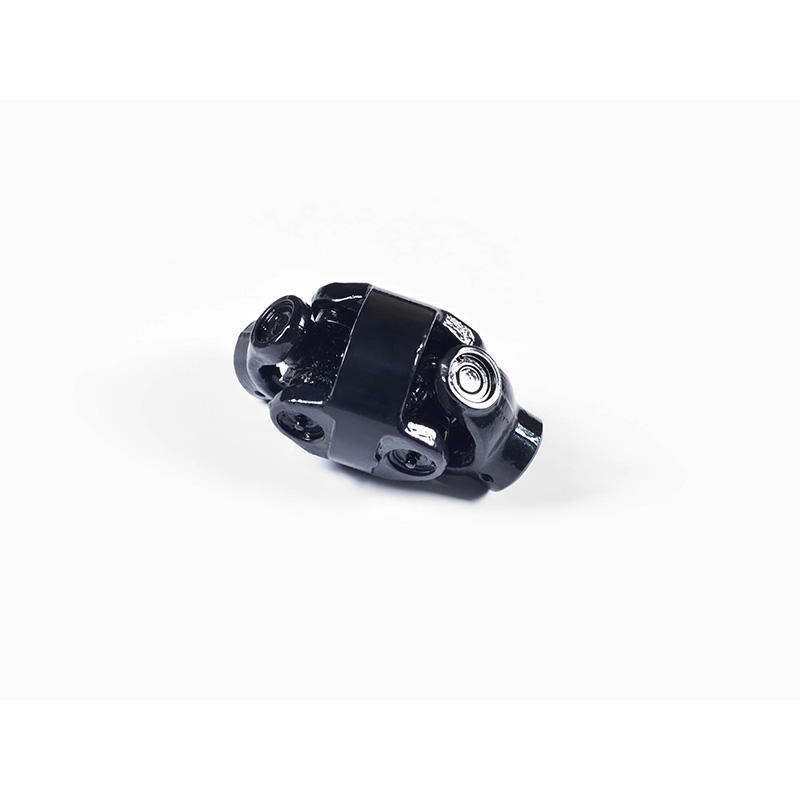

Where can I buy bevel gears? This is the question that stops many procurement managers in their tracks. You’ve just received a new project specification, and the bevel gear is no longer a standard catalog item—it needs to handle higher torque, survive intermittent shock loads, and still fit into a compact housing. The procurement deadline is tight, and your usual supplier can’t guarantee the lead time or the required inspection reports. You start searching, but the options feel endless: local machine shops, trading companies, large OEMs with minimum order quantities in the thousands. The fear of receiving gears with inconsistent tooth profiles or soft case hardening is real, and one bad batch can stall an entire assembly line. This guide walks you through exactly what to look for in a bevel gear partner, how to verify quality before you commit, and where to find a reliable supply chain that matches both your technical and commercial requirements. When a supplier combines engineering expertise, certified material traceability, and flexible volume options, the “where can I buy bevel gears” problem shifts from stress to a structured procurement decision. Raydafon Technology Group Co.,Limited has been turning that question into a reliable answer for industrial buyers worldwide.
Imagine this: you’re sourcing Bevel Gears for a conveyor drive that runs 16 hours a day in a dusty packaging plant. The OEM drawing calls for a Gleason spiral bevel set with a 90° shaft angle, but the original gears failed after only four months due to pitting on the tooth flanks. The maintenance team is frustrated, and you’re under pressure to find gears that last at least 12,000 hours. Standard catalog gears won’t work because the shaft center distances and mounting envelope are already fixed. Here’s where a manufacturer that offers engineering support becomes critical. They can analyze the failure mode, suggest a micro-geometry optimization, and adjust the contact pattern without changing the housing. Raydafon Technology Group Co.,Limited works with your existing drawings or reverse-engineers from worn samples to deliver gears that drop right in.
The table below compares typical failure scenarios and targeted solutions our engineering team applies:
| Failure Mode | Common Cause | Solution by Raydafon |
|---|---|---|
| Pitting on tooth flank | Insufficient surface hardness or lubricant film breakdown | Optimized case depth through carburizing and quenching, plus superfinishing to reduce surface roughness |
| Tooth root fracture | Overload or bending fatigue | Adjust root fillet radius and upgrade material to alloy steel like 18CrNiMo7-6 |
| Scoring and scuffing | High sliding speed with inadequate lubricant | Apply phosphate or copper plating on teeth; increase oil viscosity recommendation |
When you are struggling with a “where can I buy bevel gears” scenario that demands customization, the answer lies in a supplier that not only machines gears but also contributes to the failure analysis. This collaborative approach saves weeks of back-and-forth.
Picture this: a sourcing specialist for a mining equipment rebuild project receives a batch of bevel gears that look perfect upon visual inspection. However, within three months of operation in a dusty, high-vibration environment, several teeth shear off. Root cause analysis reveals inconsistent case hardening depth, with some areas barely reaching 0.5 mm instead of the required 1.2 mm. The material certificate claimed 8620 steel, but spark testing hinted at a lower-grade alternative. This scenario is all too common when suppliers cut corners on raw material and heat treatment. For procurement professionals, verifying a supplier’s process control around case depth, core hardness, and grain structure is non-negotiable. Raydafon Technology Group Co.,Limited provides full material traceability from the mill certificate to the final part, and our in-house heat treatment furnaces are calibrated for repeatable carburizing, nitriding, or induction hardening results.
Key parameters we report as standard for every batch:
| Parameter | Typical Requirement | Raydafon Standard |
|---|---|---|
| Case Depth (500 HV) | 0.8–1.2 mm | 0.8–1.5 mm controlled to ±0.05 mm |
| Surface Hardness | 58–62 HRC | 60–62 HRC after tempering |
| Core Hardness | 30–40 HRC | 33–38 HRC for optimal toughness |
| Grain Size | ASTM 5 or finer | ASTM 7–8 for improved fatigue life |
Where can I buy bevel gears that come with this level of metallurgical documentation? Many buyers discover that working directly with a manufacturer who controls both forging and heat treatment eliminates the risk of hidden defects. This is often the turning point in building a sustainable supply base.
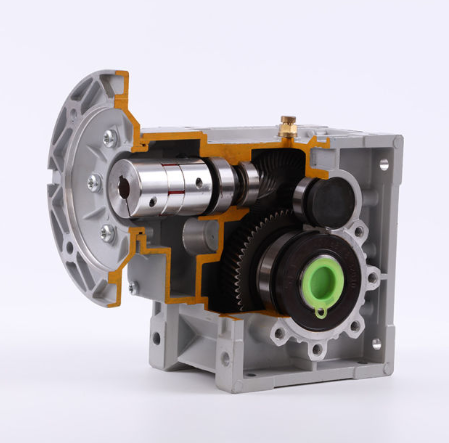
Imagine you’ve shortlisted two suppliers based on quotations, but allocating a budget for a full PPAP (Production Part Approval Process) run seems impossible given the project timeline. You’ve been burned before by samples that passed, only to receive production lots with backlash deviation or improper tooth contact. The fear is that hidden quality drift will cause premature wear, noise, and even gearbox failure on the assembly line. To eliminate this risk, a structured sampling and testing protocol is essential before signing off on a bulk order. Raydafon Technology Group Co.,Limited encourages buyers to request a pre-production sample along with a detailed measurement report. We use CNC gear measuring centers capable of checking pitch, runout, and tooth contact pattern against AGMA/ISO standards. Additionally, we can provide a short video of the gear rolling test with a master gear, something that greatly builds confidence for remote buyers.
The table below outlines the typical verification steps and what each step protects against:
| Verification Step | What It Reveals | Raydafon Approach |
|---|---|---|
| Dimensional inspection (CMM or gear tester) | Pitch error, tooth thickness, bore tolerance | 100% inspection for first article; statistical sampling for bulk |
| Contact pattern check | Misalignment risk and load distribution | Rolling test with marking compound under light load |
| Hardness and case depth test | Heat treatment consistency | Micro-Vickers hardness traverse on a batch sample |
| MPI or ultrasonic testing | Sub-surface cracks or forging laps | Available per customer request |
Where can I buy bevel gears when you need this kind of pre-shipment verification? The answer is a partner that treats the sampling phase as a collaborative stage rather than a sales hurdle, ensuring the production run mirrors the approved sample exactly.
Deadline nightmares often start with a simple email: “Due to raw material shortage, your order is delayed by 6 weeks.” Suddenly your maintenance turnaround or new machine launch is at risk. In bevel gear procurement, lead time isn’t just about machining hours—it involves forging blank availability, heat treatment scheduling, and sometimes secondary operations like gear grinding. Buyers need a supplier who has pre-negotiated capacity with forging mills and who keeps strategic stock of common alloy steel billets. Raydafon Technology Group Co.,Limited operates with a buffer stock program for frequently specified materials (e.g., 20CrMnTi, 42CrMo4) and can shave weeks off the typical lead time without rushing quality. Our logistics team also handles multimodal freight, including courier for urgent small batches and sea freight with tracked containers for large volumes, giving you a single point of contact from factory floor to your warehouse.
Many gear manufacturers set high MOQs that exclude R&D teams and small-batch projects. At Raydafon Technology Group Co.,Limited, we accept orders as low as 10 pieces for prototype bevel gears, provided the tooth parameters are within our standard tooling range. We use flexible CNC setups and can even assist with slight design tweaks if initial tests reveal noise or wear issues. This means you can iterate quickly without having to commit to thousands of gears upfront. Reach out at [email protected] with your CAD model, and we’ll return a feasibility and costing report within 48 hours.
Interchangeability with premium brand spiral bevel gears requires not only accurate tooth geometry but also matching the reference profile and crowning. Our engineering team has deep experience with both cyclo-palloid and Gleason tooth systems. We match the tooth surface topology using Klingelnberg gear measuring centers and produce the gears on 5-axis CNC machines or dedicated bevel gear generators. The result is a drop-in replacement that maintains the contact ellipse and backlash specifications of your original set. Just share the gear drawing or manufacturer part number, and we will provide a technical conformity statement before you place the order.
Procurement professionals frequently face a trade-off: a cheap gear unit that lasts one season versus a premium option that stretches the budget. The real cost of a bevel gear isn’t its price tag—it’s the total cost of ownership, including downtime, replacement labor, and potential damage to connected equipment. By working with a supplier that offers value engineering—suggesting a forged blank instead of cast, or a slightly modified pressure angle to increase strength—you can often achieve a 20–30% life extension for a minimal upfront increase. Raydafon Technology Group Co.,Limited helps you model these trade-offs transparently. For example, upgrading from standard 20CrMnTi to 18CrNiMo7-6 may add 15% to the unit price but can double the fatigue life in high-load applications. We present these scenarios before cutting chips, so your purchasing decision is backed by engineering data.
When you ask “Where can I buy bevel gears?” you’re really asking for a supply partner that combines technical insight, consistent quality, and reliable delivery. Raydafon Technology Group Co.,Limited has positioned itself as that partner for procurement managers in industries ranging from off-highway vehicles to industrial mixing. Our dedicated gear cell, supported by in-house heat treatment and gear metrology, gives us control over the entire manufacturing chain. We don’t just ship gears; we ship documented confidence—from material certs to gear inspection reports in PDF format. And when you need to troubleshoot a field issue, our engineers join the call to diagnose root causes, often saving you from unnecessary redesigns.
Ready to move past the search and into a stable supply? Contact our gear specialists today at [email protected] or visit our website at https://www.raydafon-chains.com to start a conversation about your next bevel gear project. Let’s turn your “where can I buy bevel gears” challenge into a fully documented, on-time delivery.
Radzevich, S. P. (2012). Dudley's Handbook of Practical Gear Design and Manufacture. CRC Press, 2nd Edition.
Litvin, F. L., & Fuentes, A. (2004). Gear Geometry and Applied Theory. Cambridge University Press, 2nd Edition.
Klingelnberg, J. (2016). Bevel Gear: Fundamentals and Applications. Springer Vieweg.
AGMA. (2014). AGMA 2005-D03: Design Manual for Bevel Gears. American Gear Manufacturers Association.
ISO. (2018). ISO 23509:2016 - Bevel and hypoid gear geometry. International Organization for Standardization.
Höhn, B.-R., & Michaelis, K. (2011). “Influence of lubricant on pitting life of bevel gears.” Gear Technology, 28(3), 42–50.
Stadtfeld, H. J. (2014). “Practical Gear Inspection.” Gear Solutions, March 2014 issue.
Bajpai, P., & Kahraman, A. (2013). “A compliant region model for tooth contact analysis of spiral bevel gears.” Journal of Mechanical Design, 135(2), 024501.
Simon, V. (2009). “Design and manufacture of spiral bevel gears with reduced transmission errors.” Journal of Mechanical Design, 131(4), 041007.
Mao, K. (2007). “Gear tooth contact fatigue life prediction.” International Journal of Fatigue, 29(9-11), 1771–1780.